Hardwood Flooring Portland, OR
—— Established 2007
Eco Floors is Portland, OR’s finest hardwood flooring company. We offer certified eco friendly materials, expert installation, and over 125 years of company wide experience. Hardwood comes in many species, sizes, grades, finishes, and types of construction. This guide will help you if you are refinishing your existing floors, or if you are starting from scratch.
Why Portland Home Owners Choose HardwoodFloors
01. The Vibe
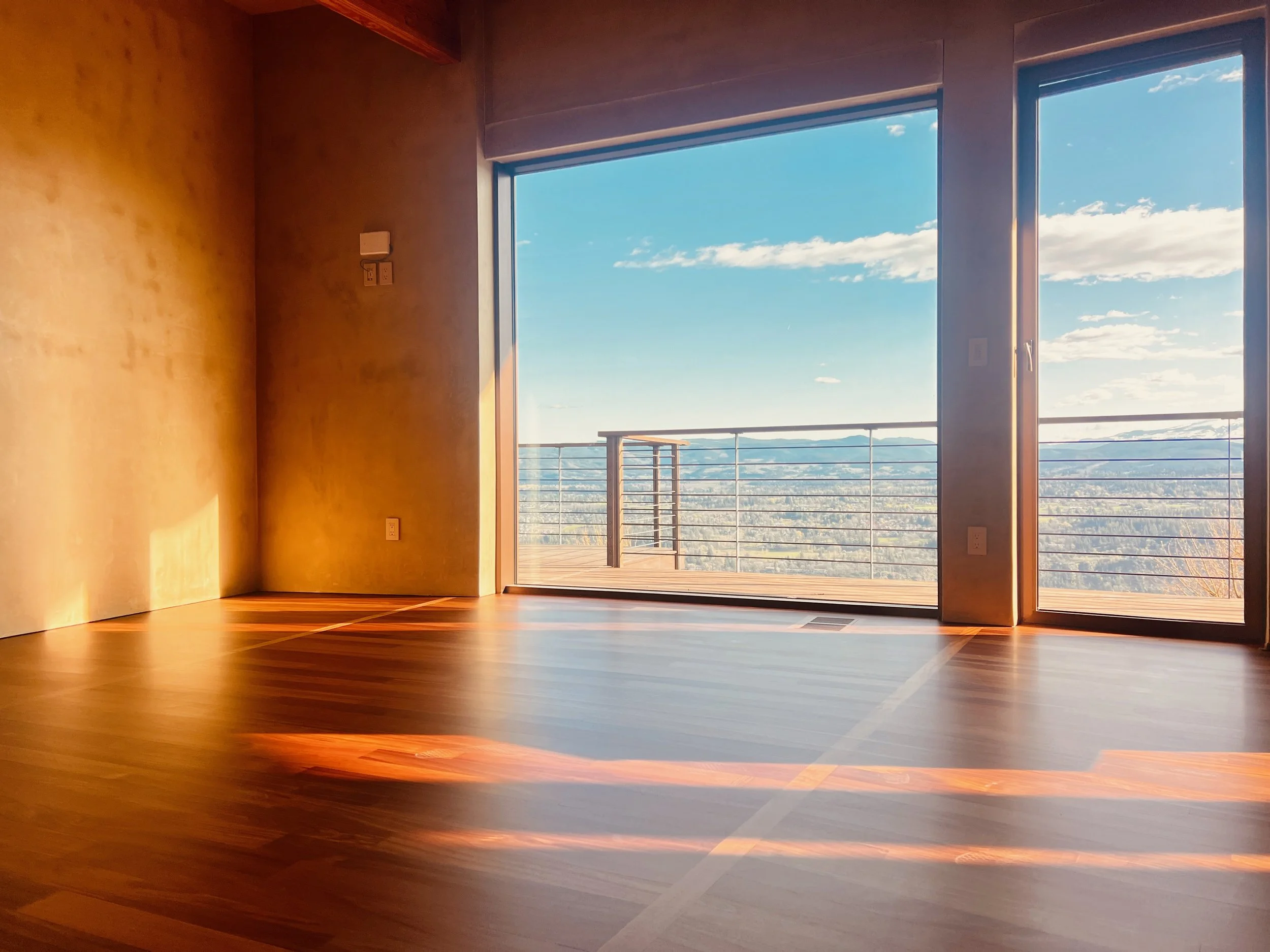
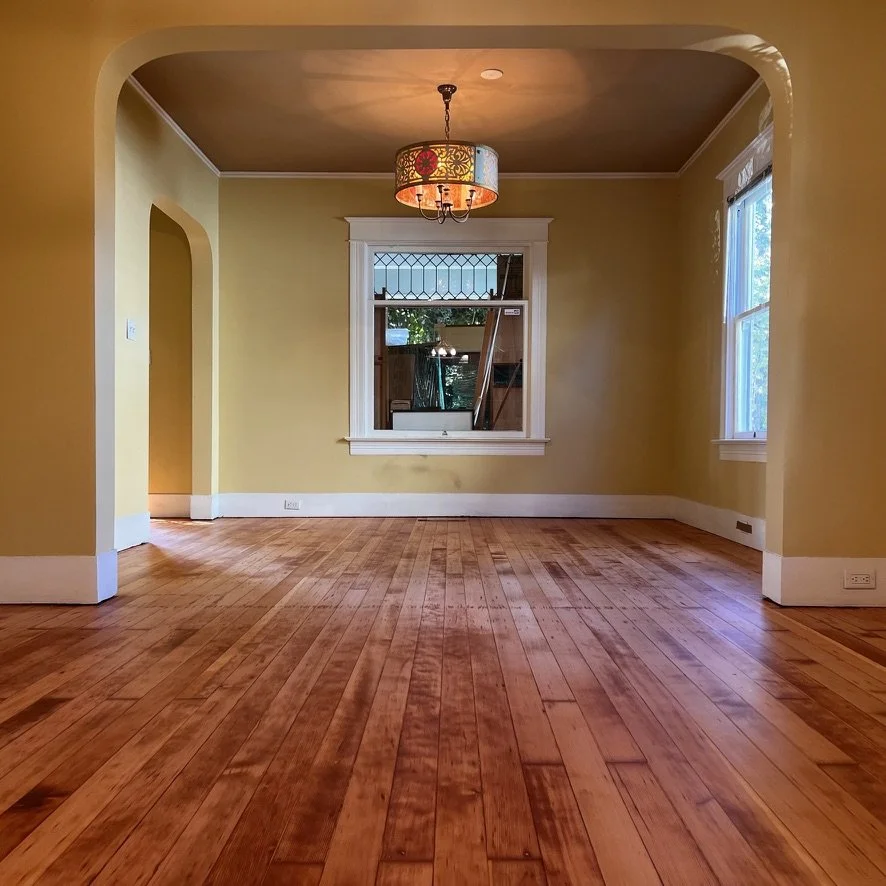
When you drive through neighborhoods like Sellwood, Irvington, and ladd’s addition, you can feel their style. This is what makes Portland residents fall in love with the area. Our community loves tradition, and they preserve it by starting with their homes. Portland is packed full of bungalows, victorian, mid century modern, four squares, and craftsman style homes. These styles highlight the natural beauty of wood, and feature it frequently throughout the home. Most of these houses already have red oak, white oak, or fir flooring installed.
02. The Material
Hardwood floors are a timeless luxury. Add them to any home, and you’ll instantly improves its value. Few materials are as renewable as hardwood, last as long, or can be infinitely customized to one’s taste. You can install it in any room. A staircase made of hardwood is an instant show piece. It can last over 100 years, and develops charm as it ages. Is there any better value?
Common Portland Hardwood Species
RED OAK
WHITE OAK
WALNUT
MAPLE
YELLOW BIRCH
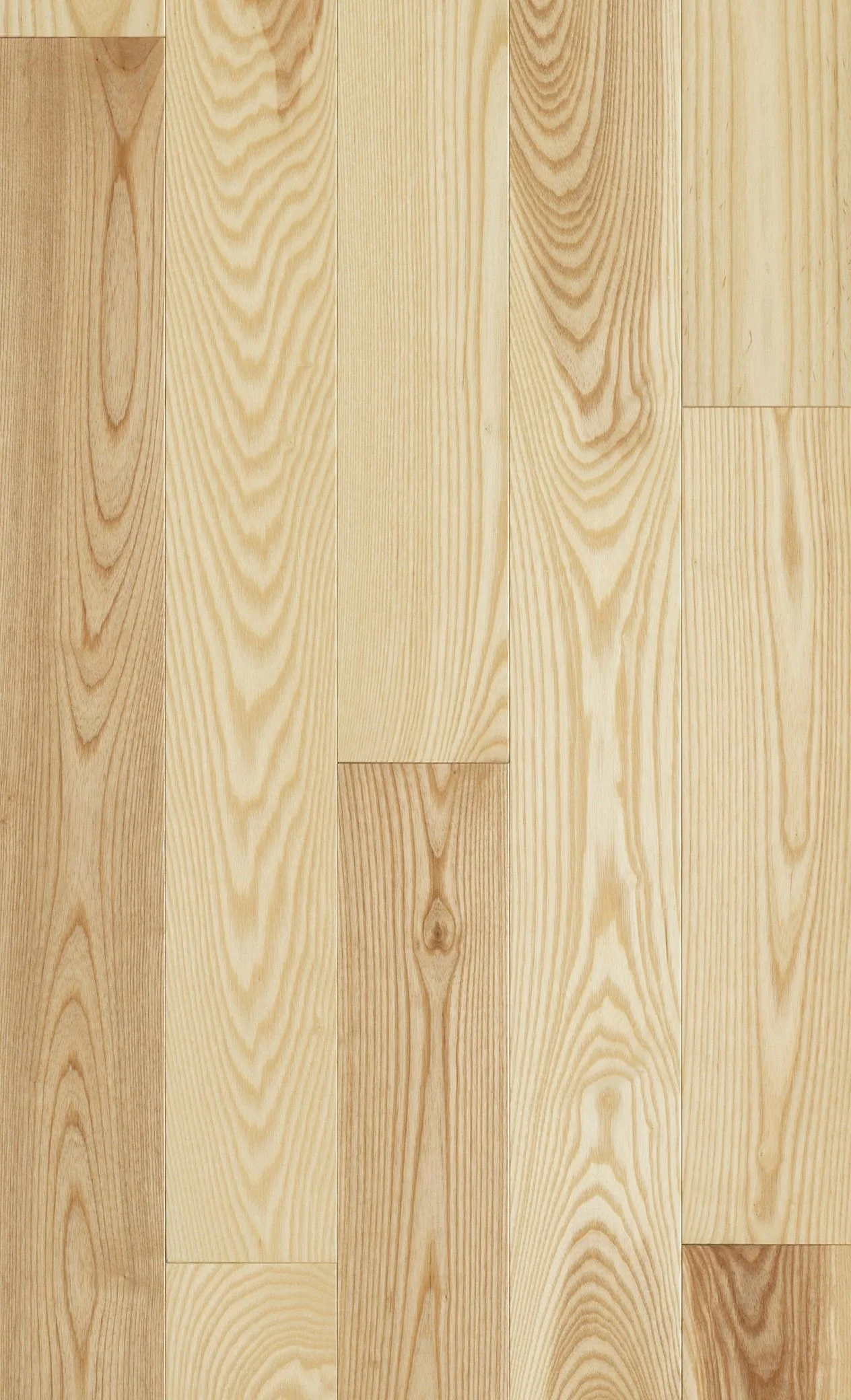
ASH
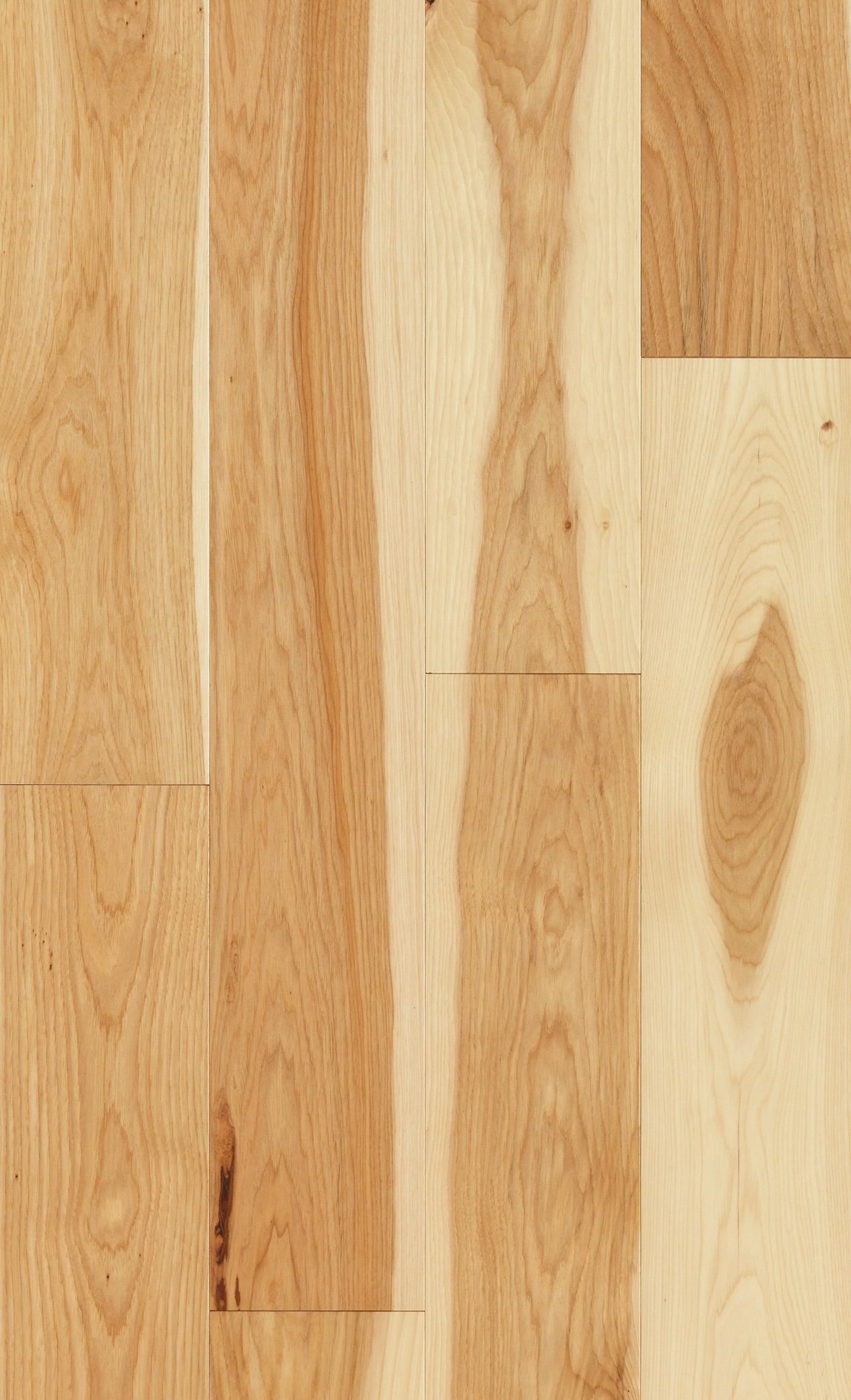
HICKORY
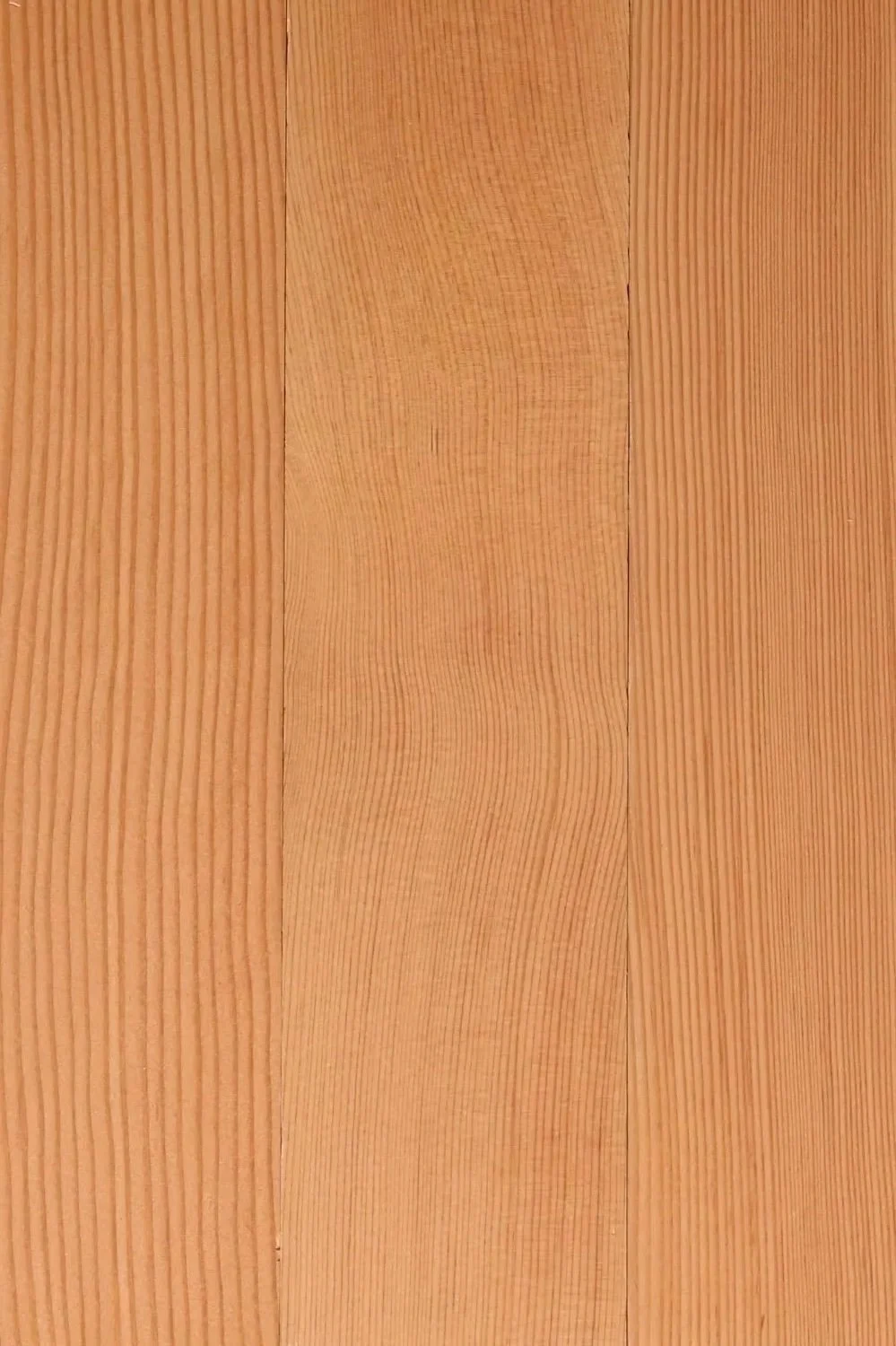
FIR
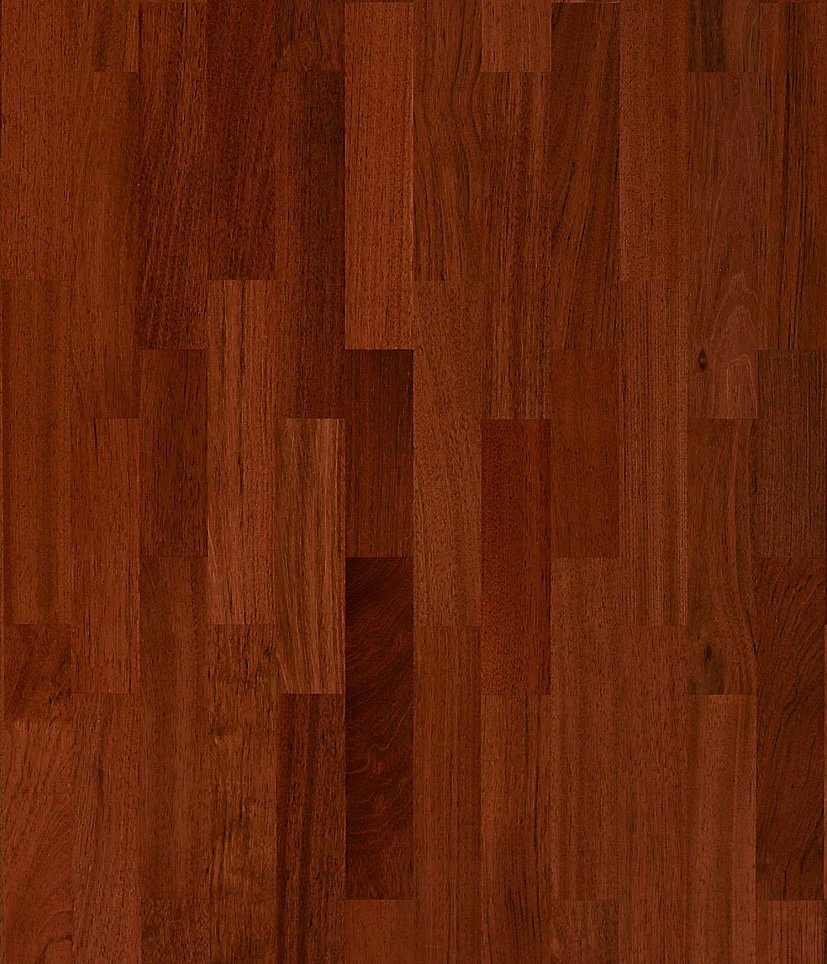
BRAZILIAN CHERRY
Red Oak vs White oak
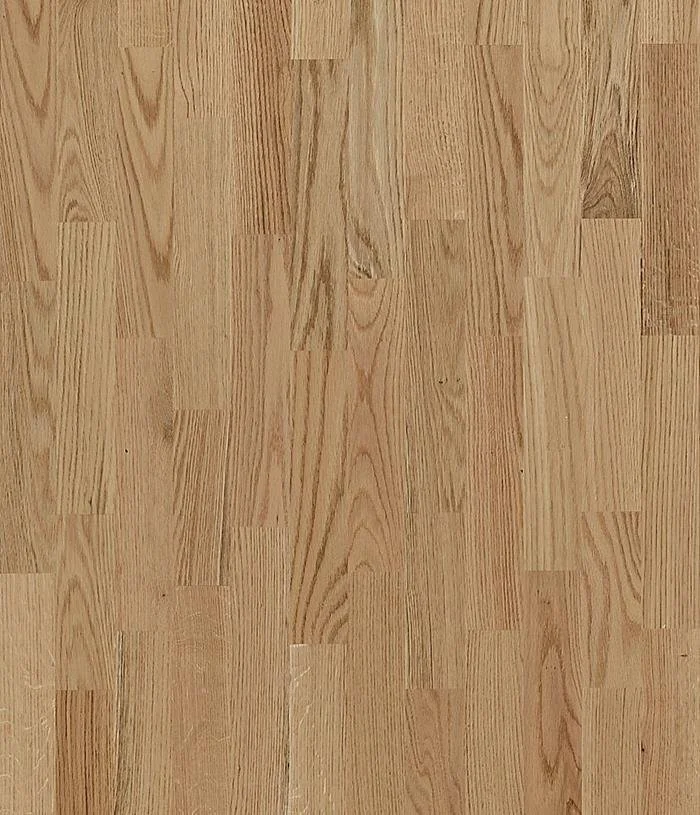
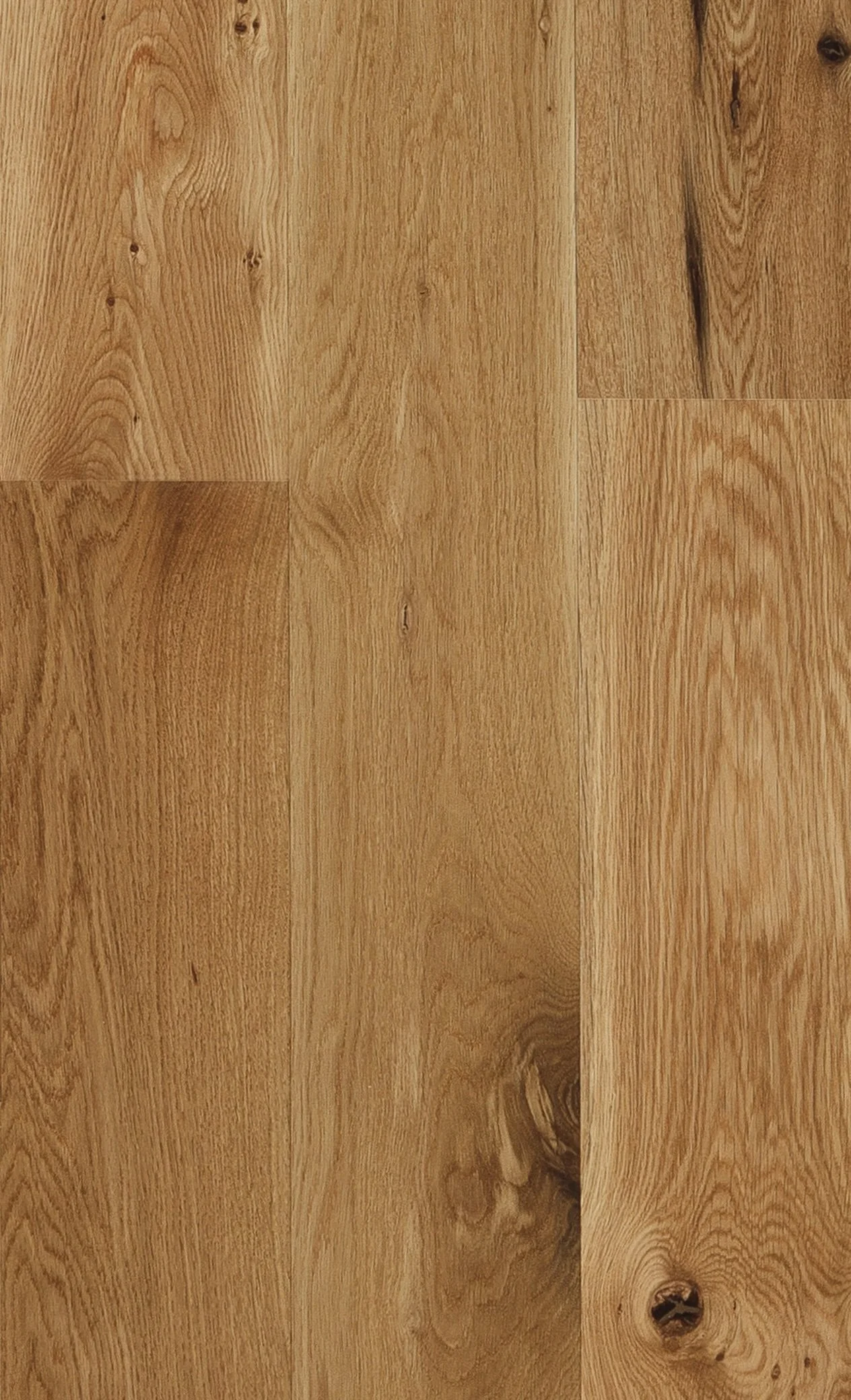
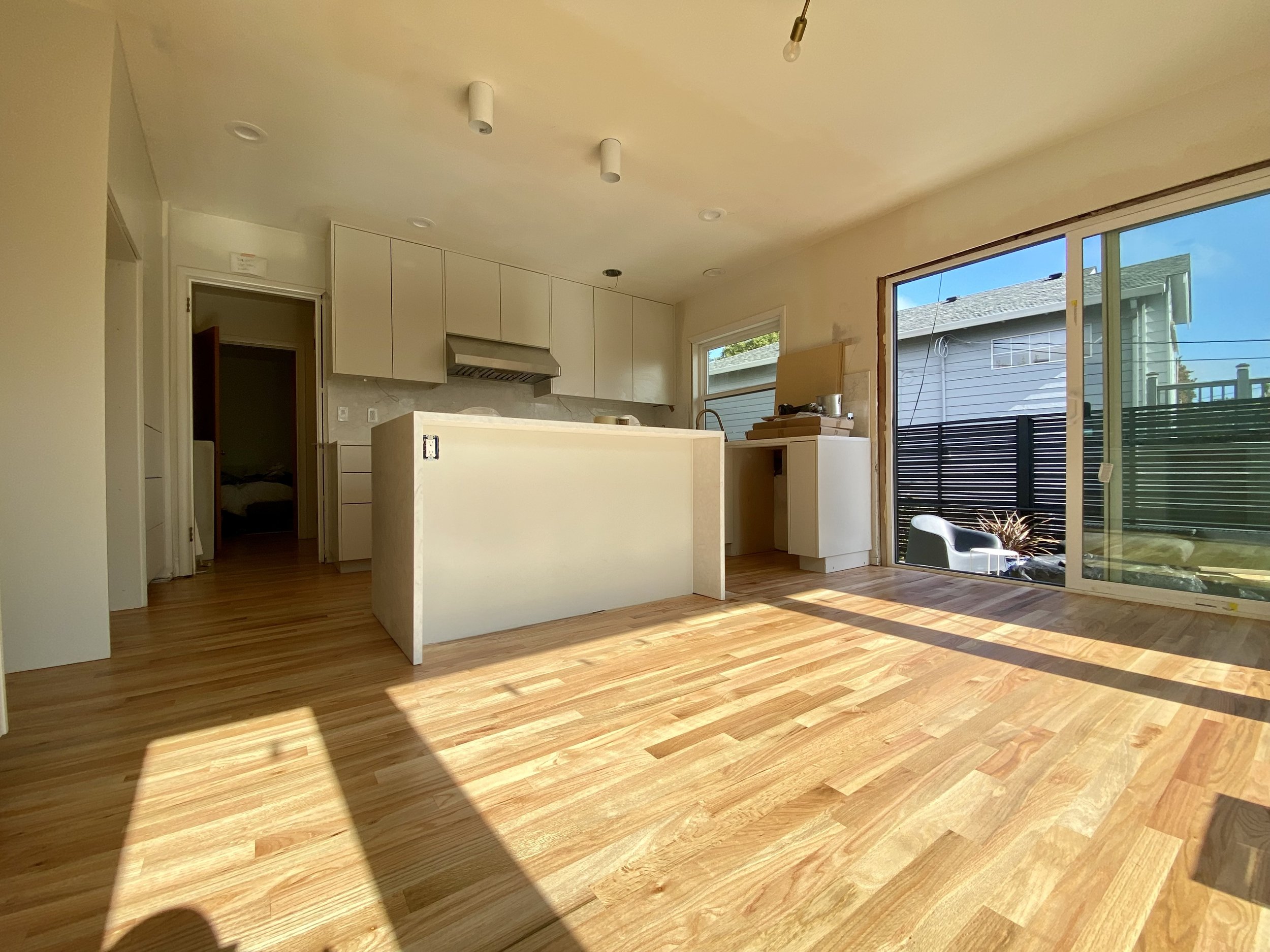
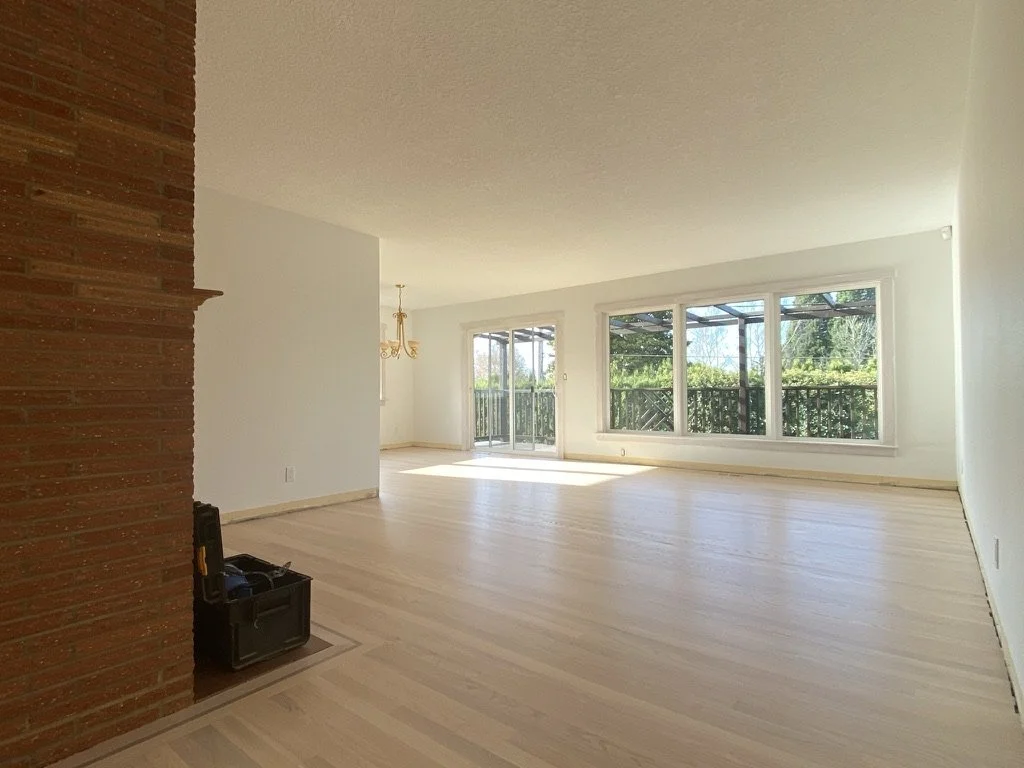
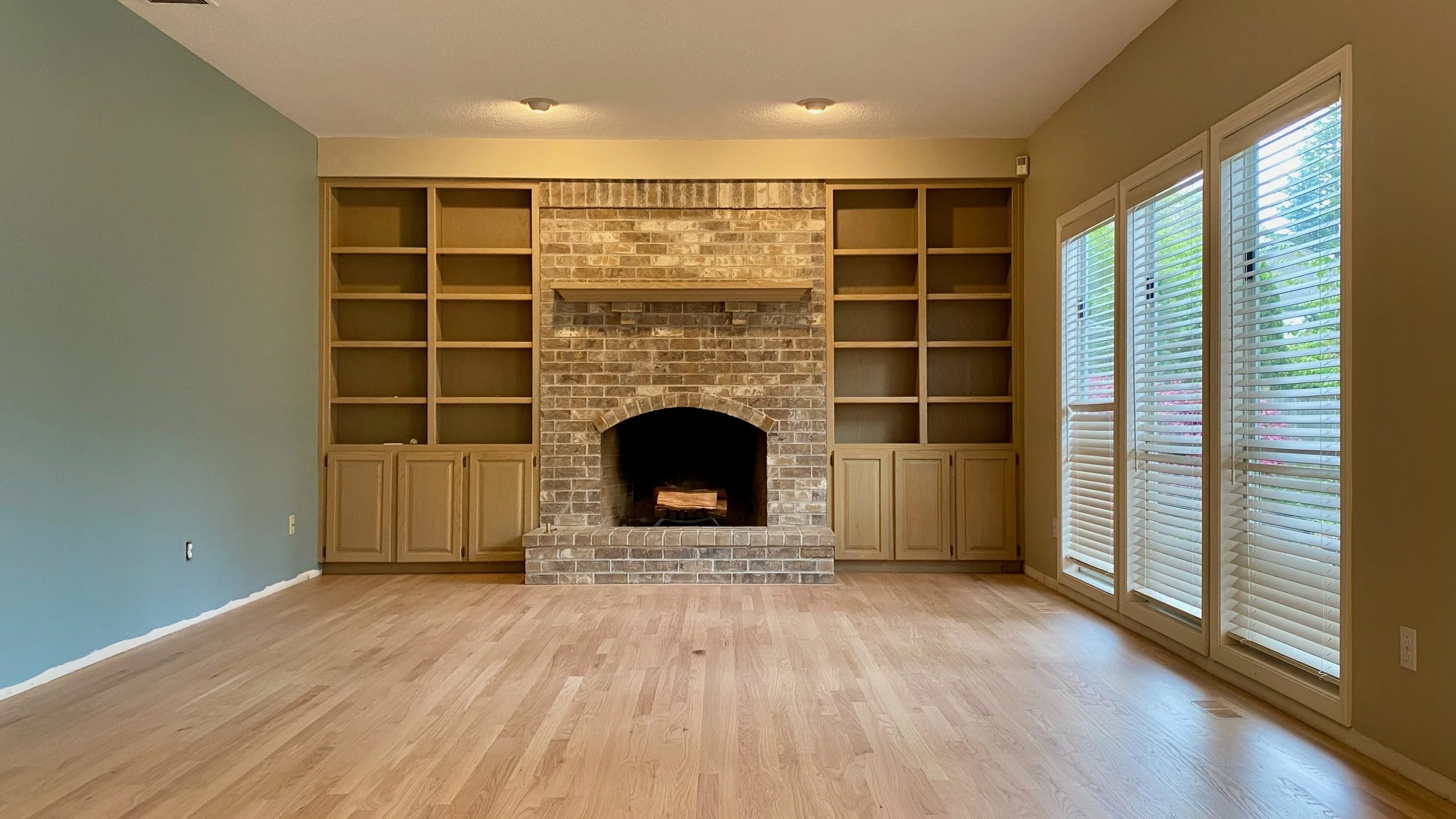
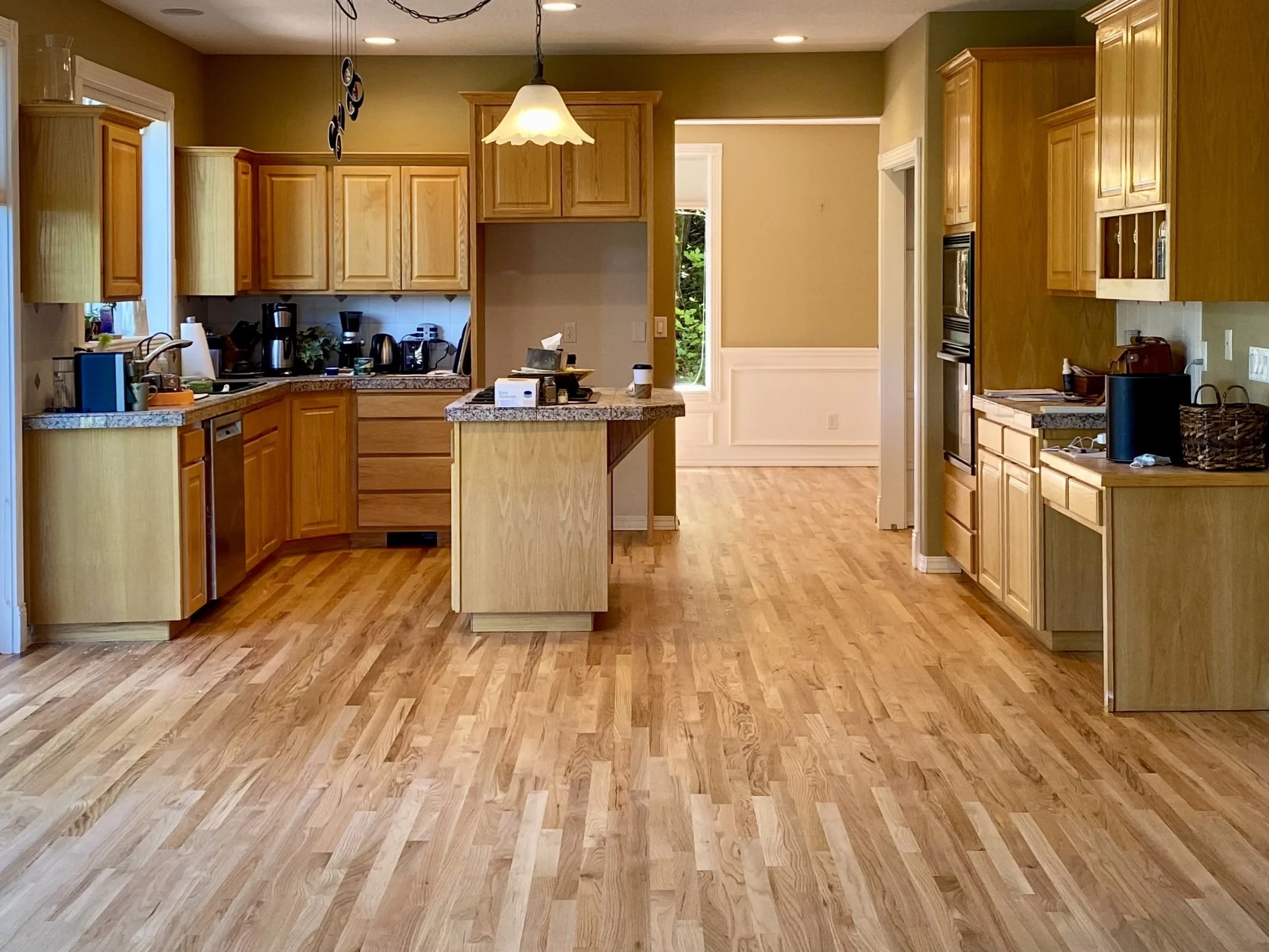
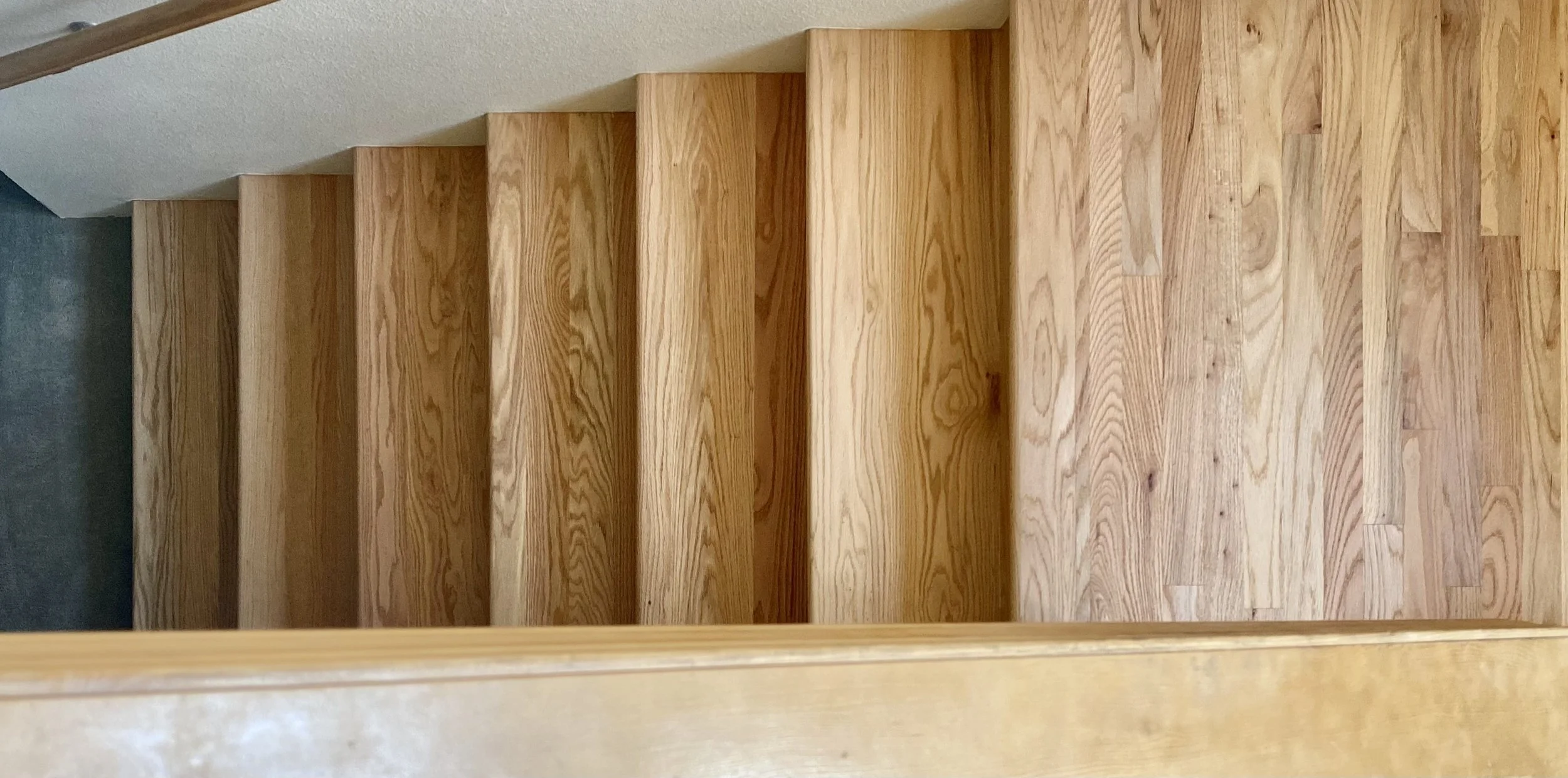
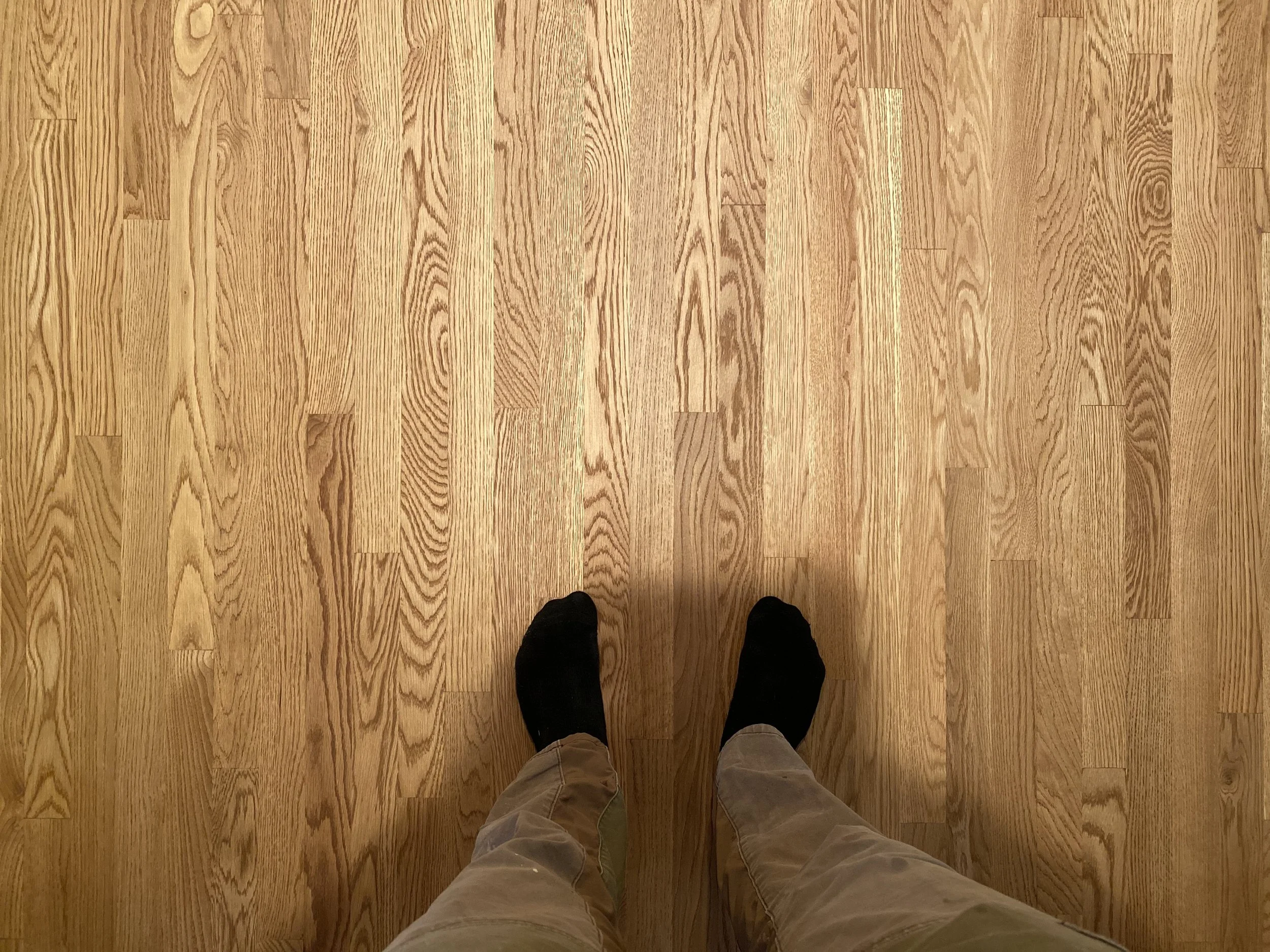
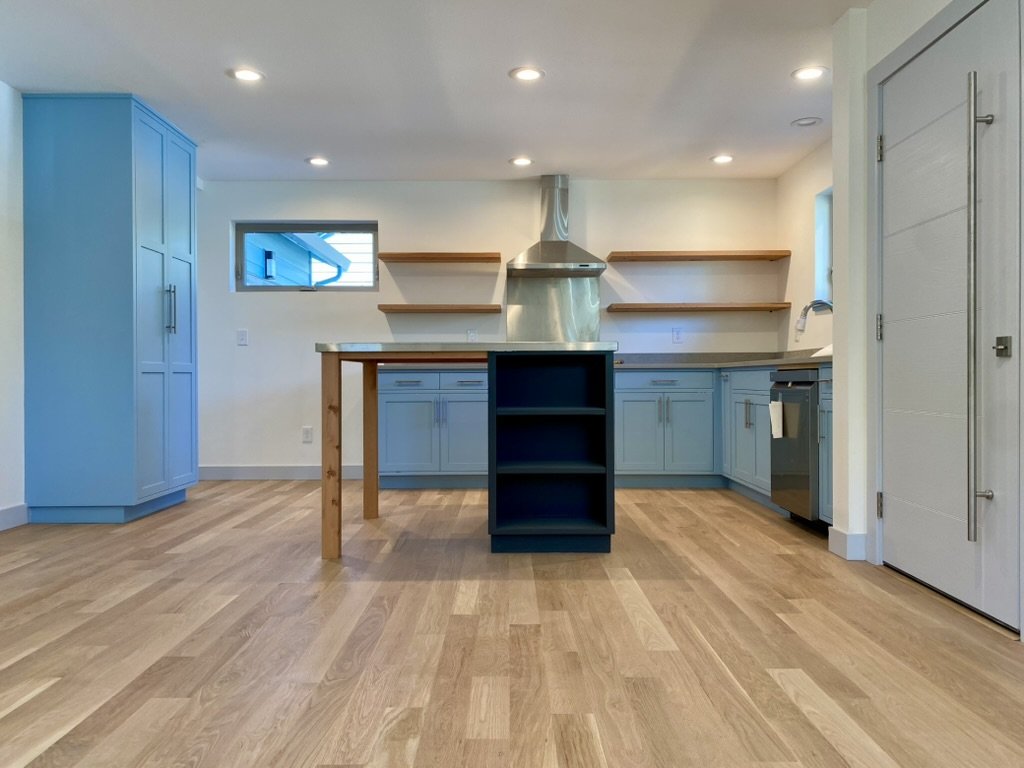
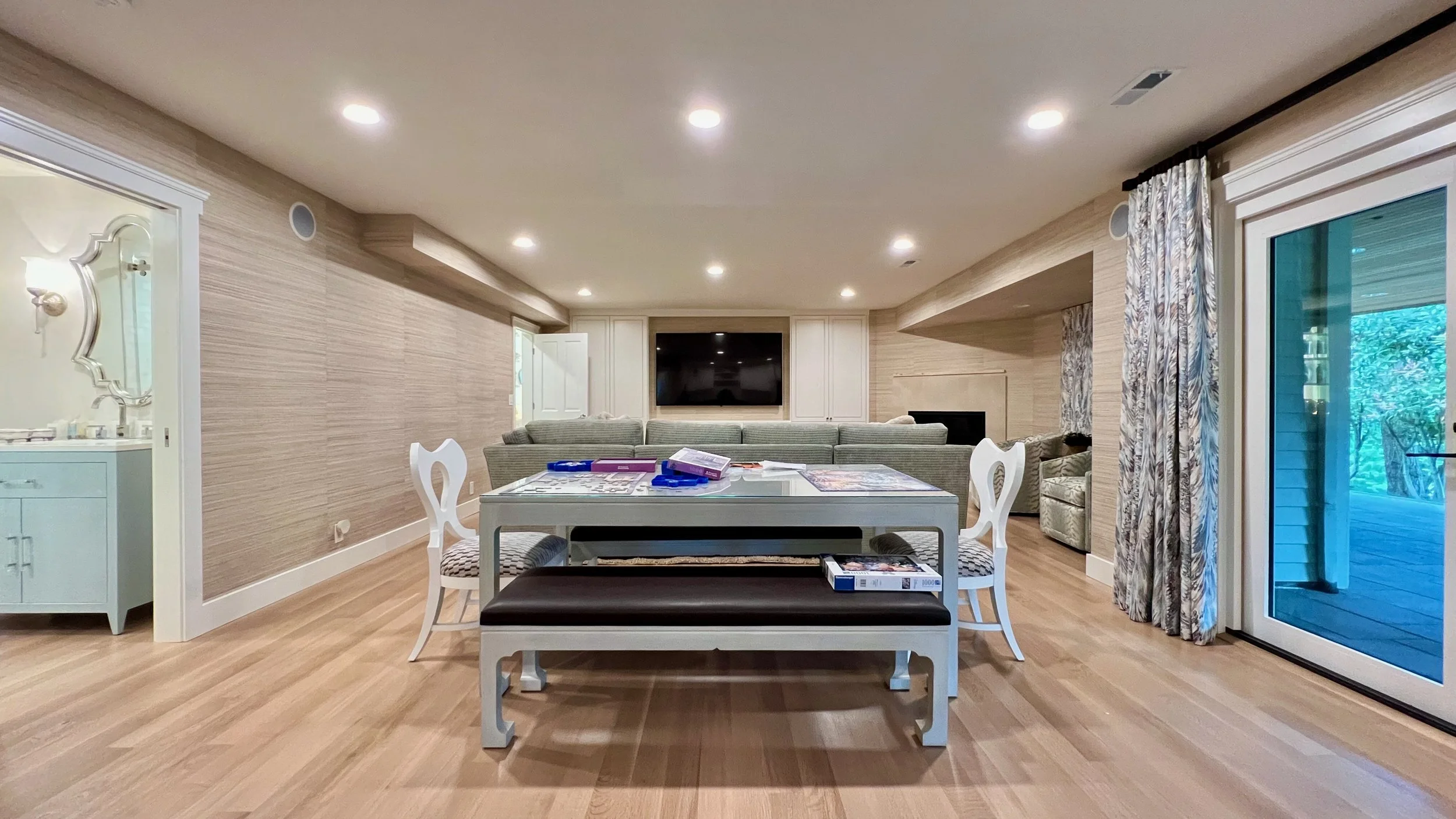
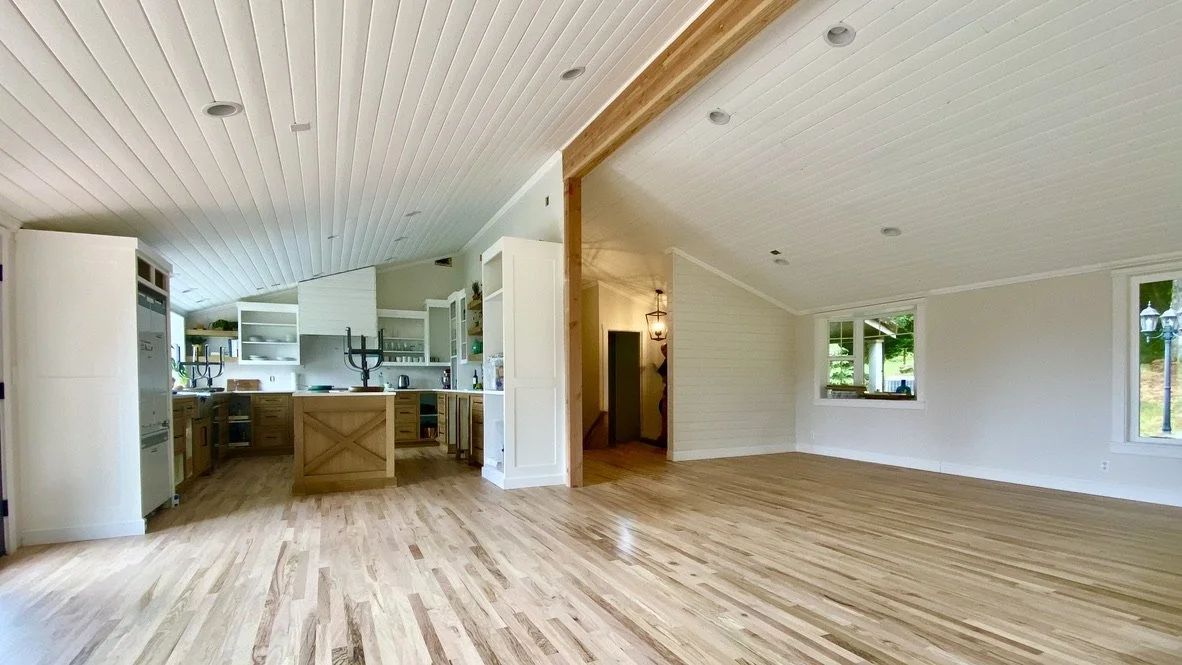
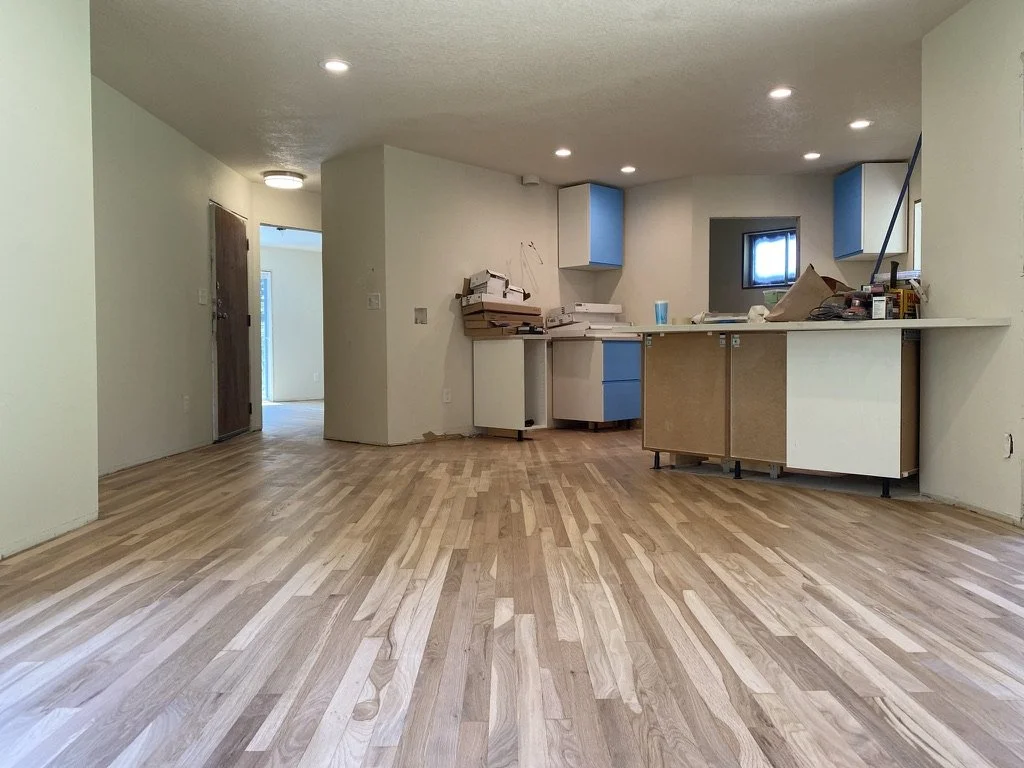
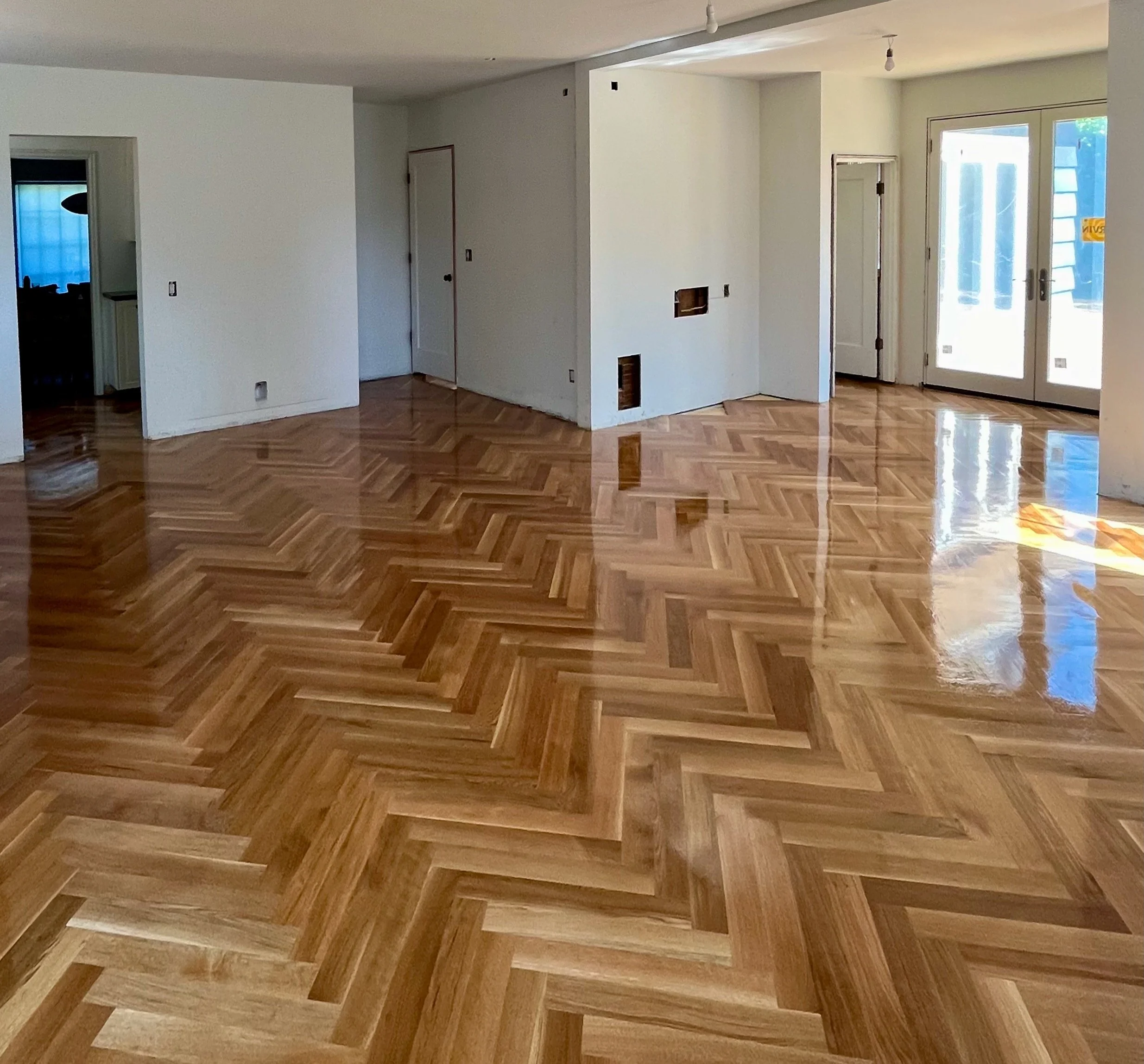
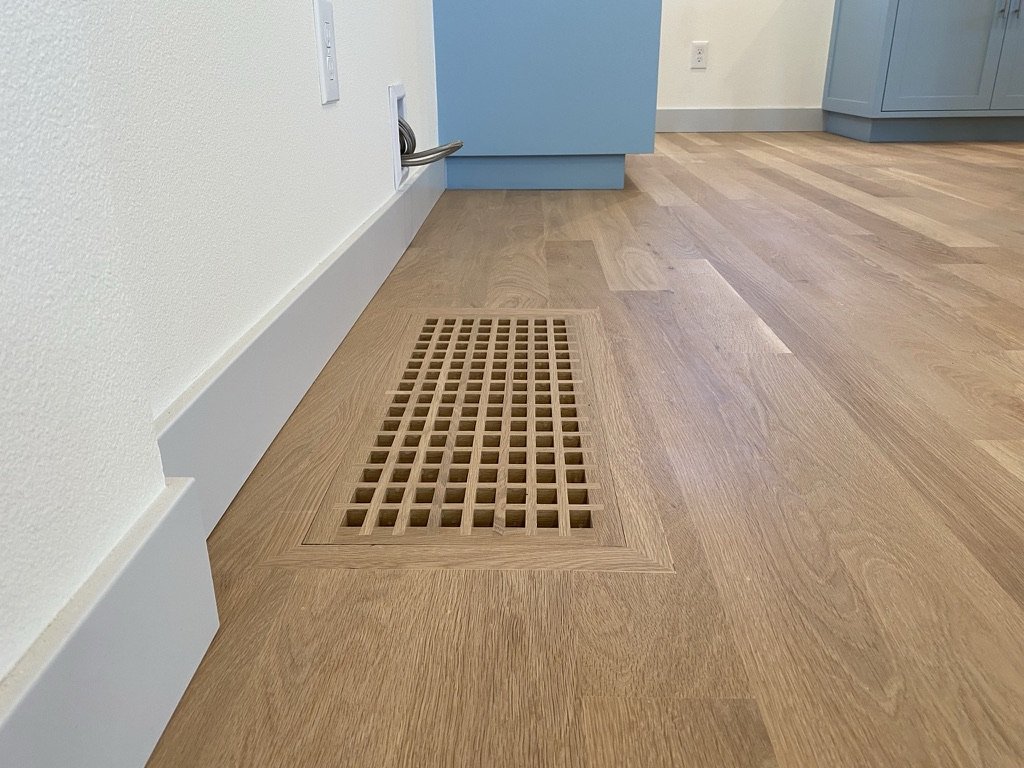
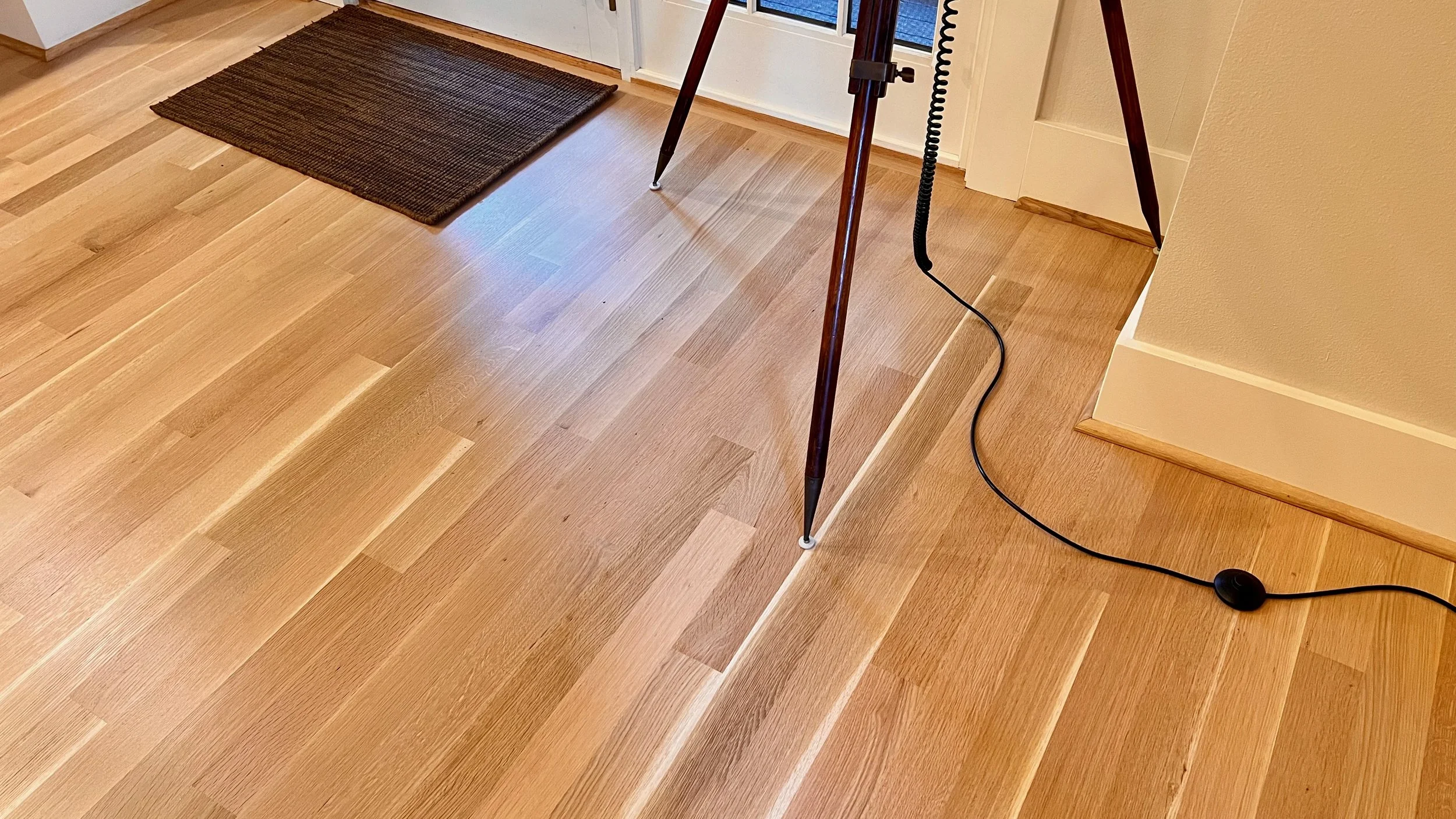
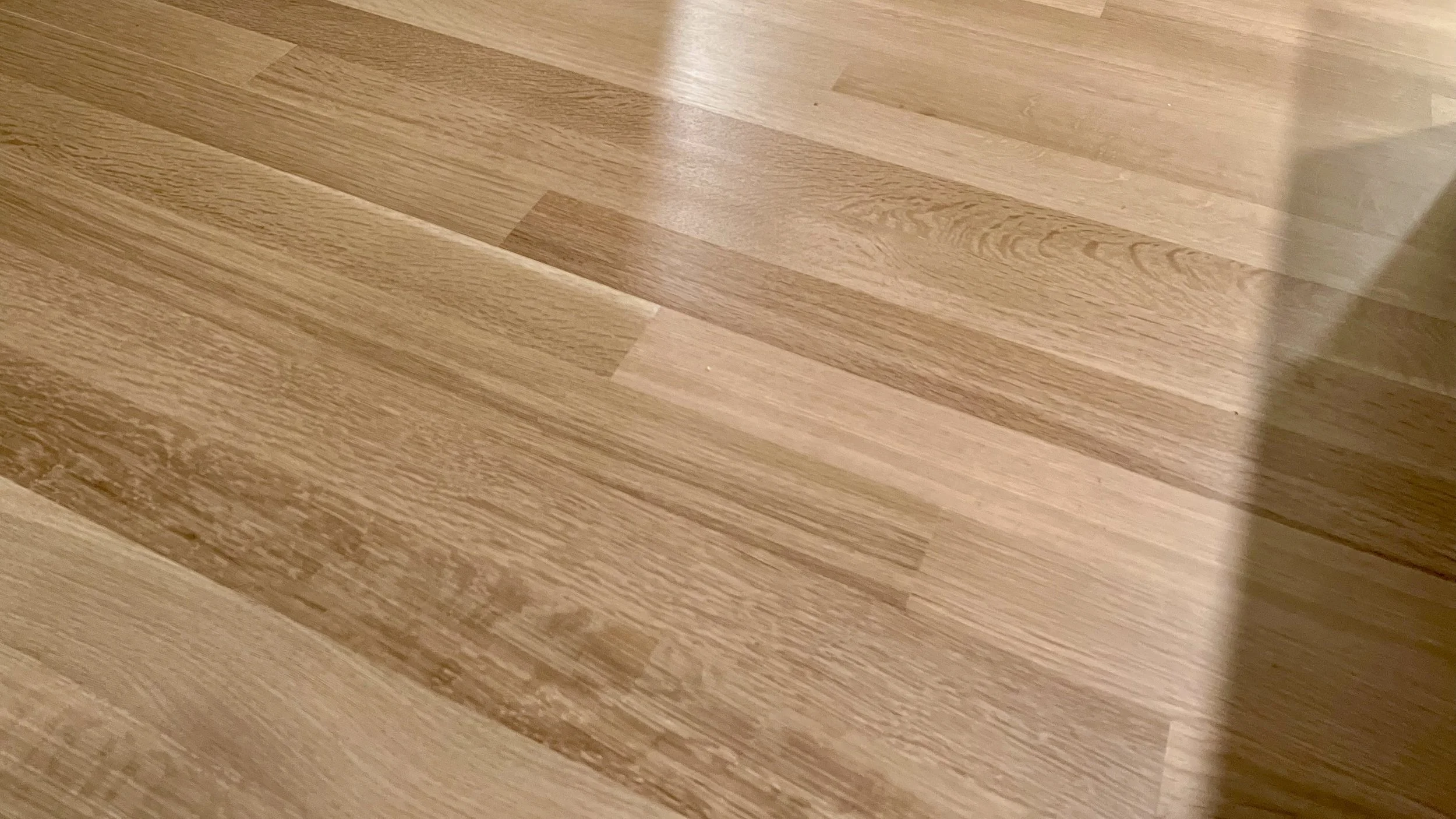
Most homes in the Portland metro area, that have real hardwood floors, will have either red oak or white oak. When clients choose to add new hardwood to their homes, oak is a popular choice because it’s cost effective, and durable. Oak also accepts stains and finishes very well, meaning you can achieve almost any color with it.
Red Oak
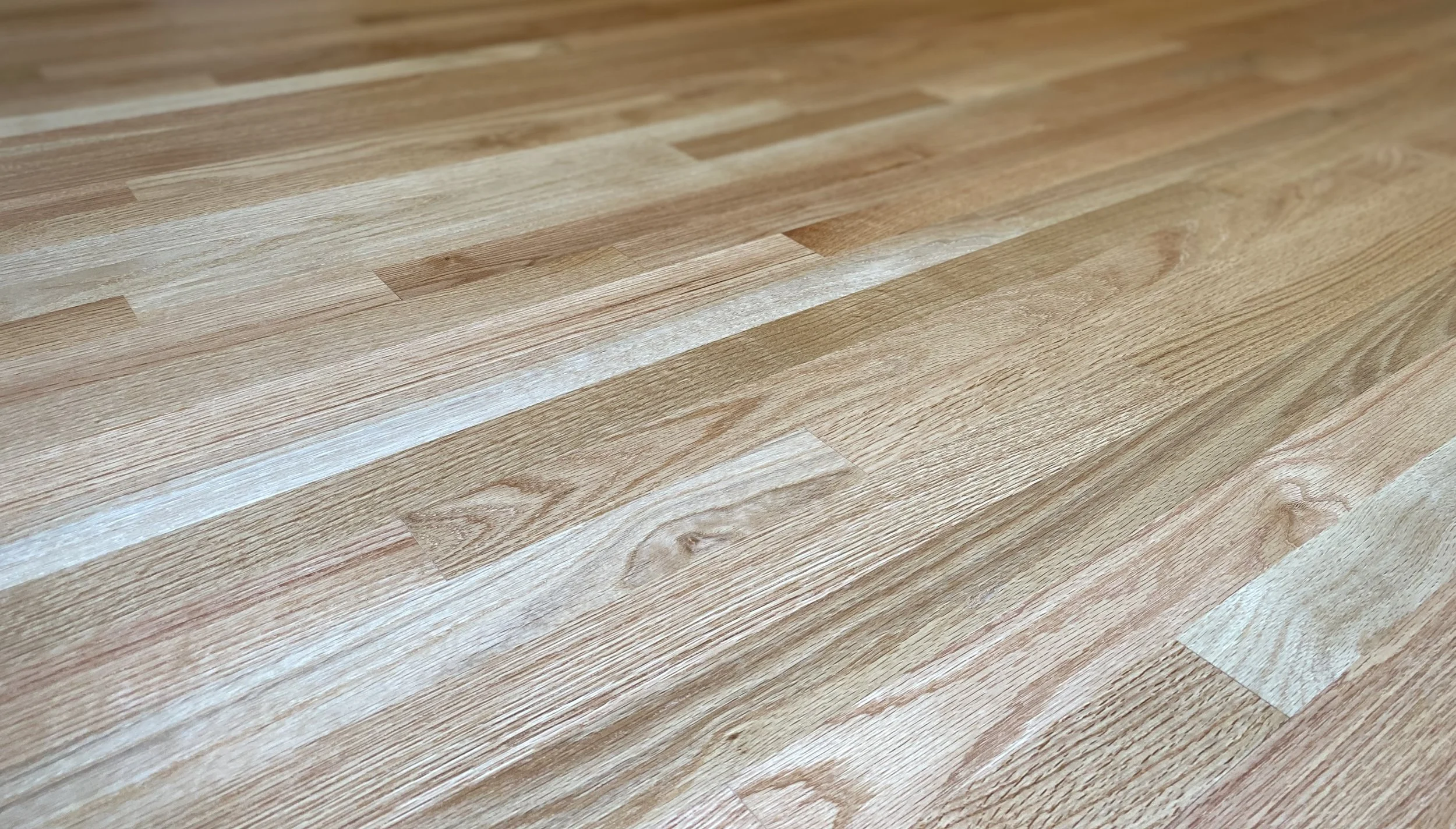
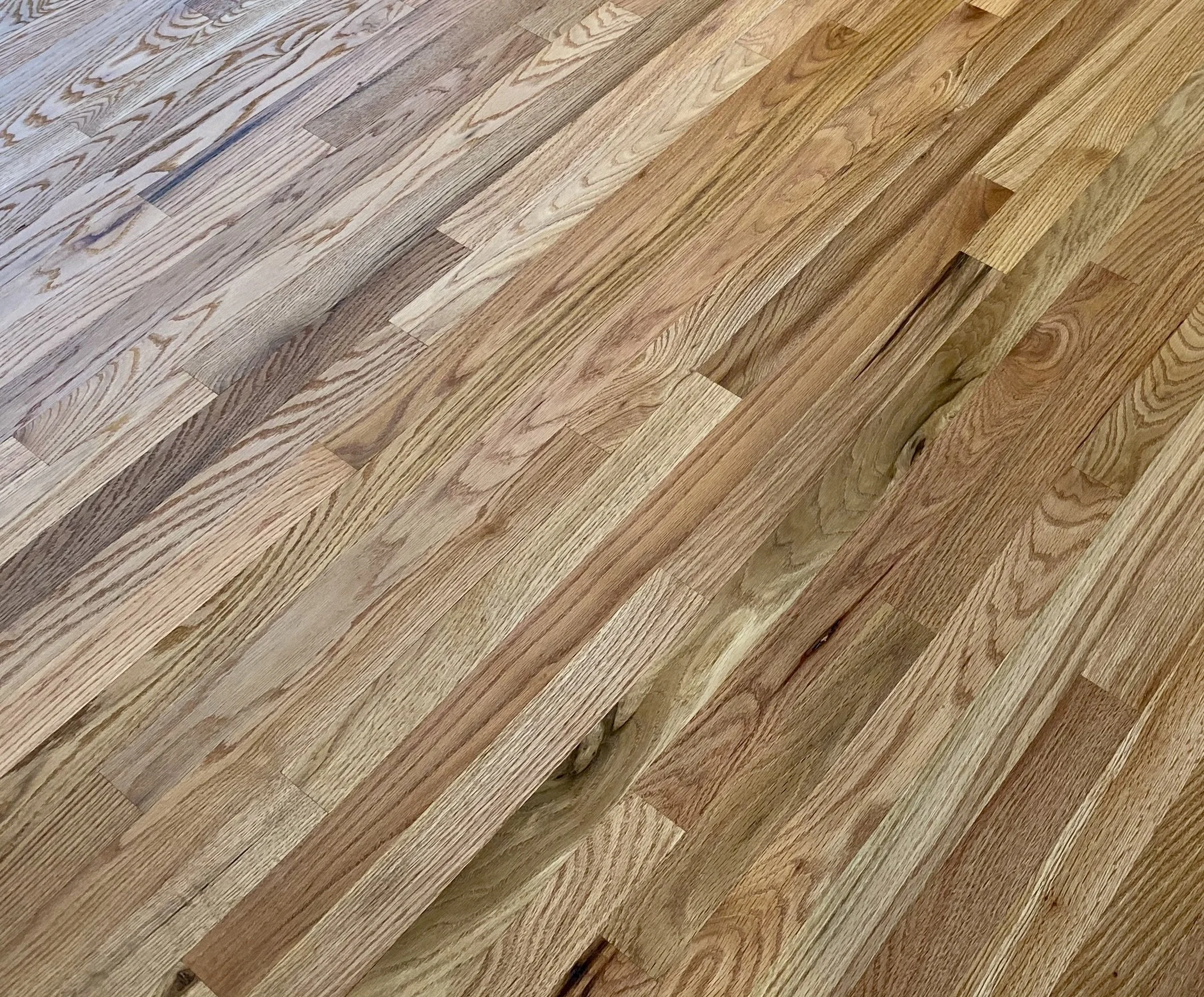
White oak

Hardwood Floor Grading
-
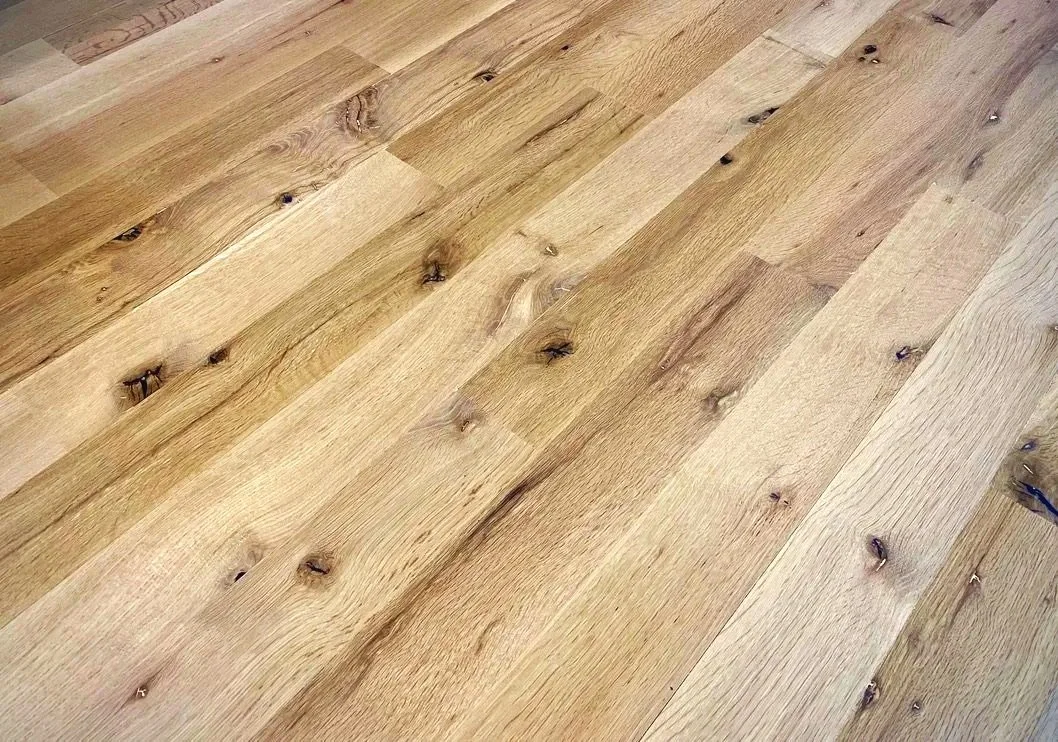
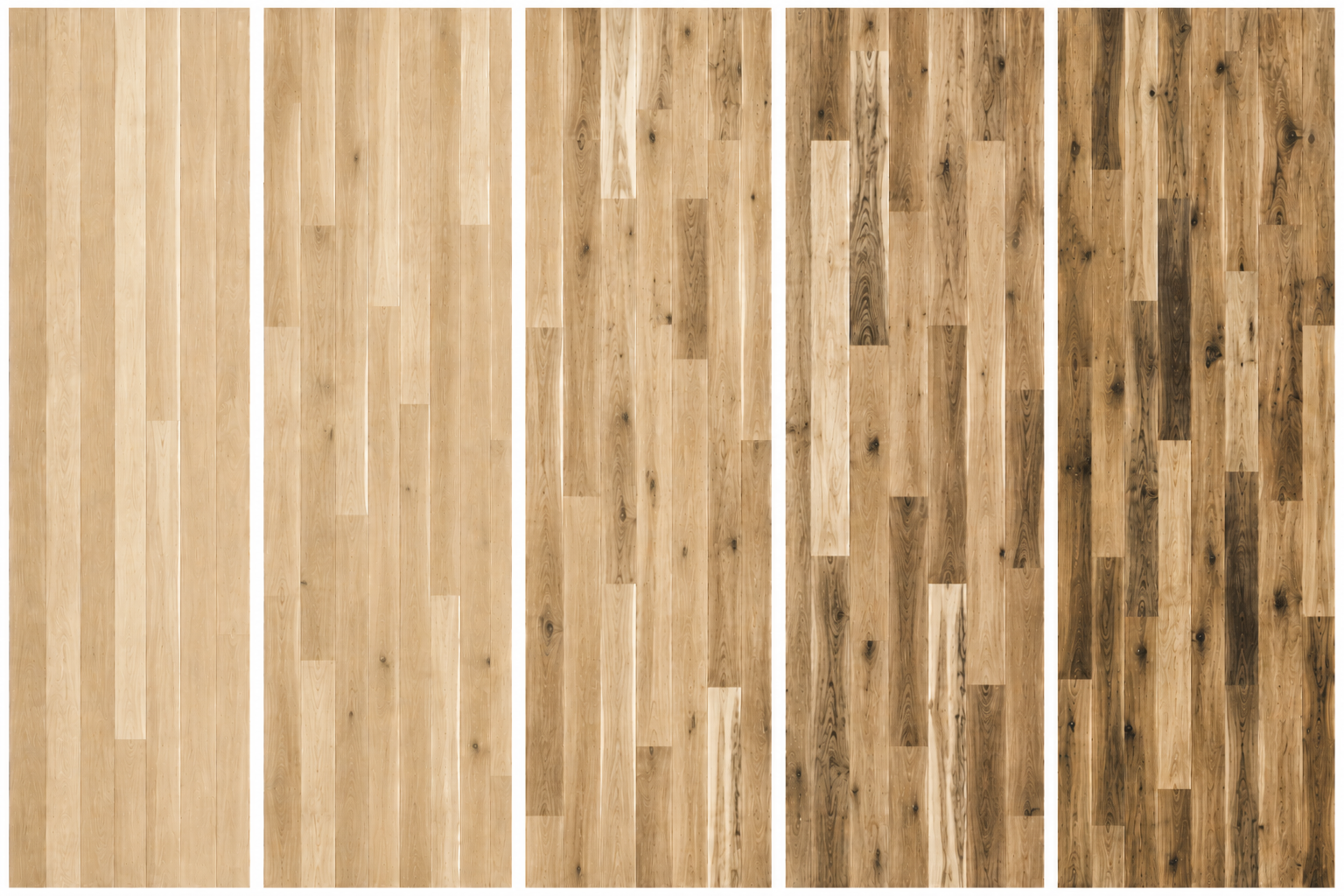
Hardwood floor grading is used to categorize flooring based on the amount of color variation, knots, and mineral streaks in the wood, as well as average board length.
-
Do not think lower grade = worse floor. Grading will not noticeably affect the longevity of the floor. The biggest thing it will change is the appearance. Clear is the highest grade, while utility is the lowest. Notice how variation, and knots increase as the grade goes down, and the board length gets shorter.
-
Typically, the lower the grade, the cheaper the flooring costs. However, most installers will charge more for lower grade flooring because of 3 things - the way it’s manufactured, it’s lengths, and the knots/gaps that need filled. These add significant labor costs.
-
A third party - the NWFA/NOFMA, and other organizations such as MFMA. View current NWFA standards here.
-
No, grading flooring is not a science. There are differences from mill to mill, between species, and from one manufacturer to another, despite NWFA standards. Grading standards are also declining. For homeowners, this means that you want a professional giving you advice. This is especially true if your adding on to existing hardwood flooring in your home. When buying new wood, it is a good idea to order a bundle first.
From left to right: Clear, Select, #1 Common, #2 Common, Utility Grade
The way the wood is sawn changes its look
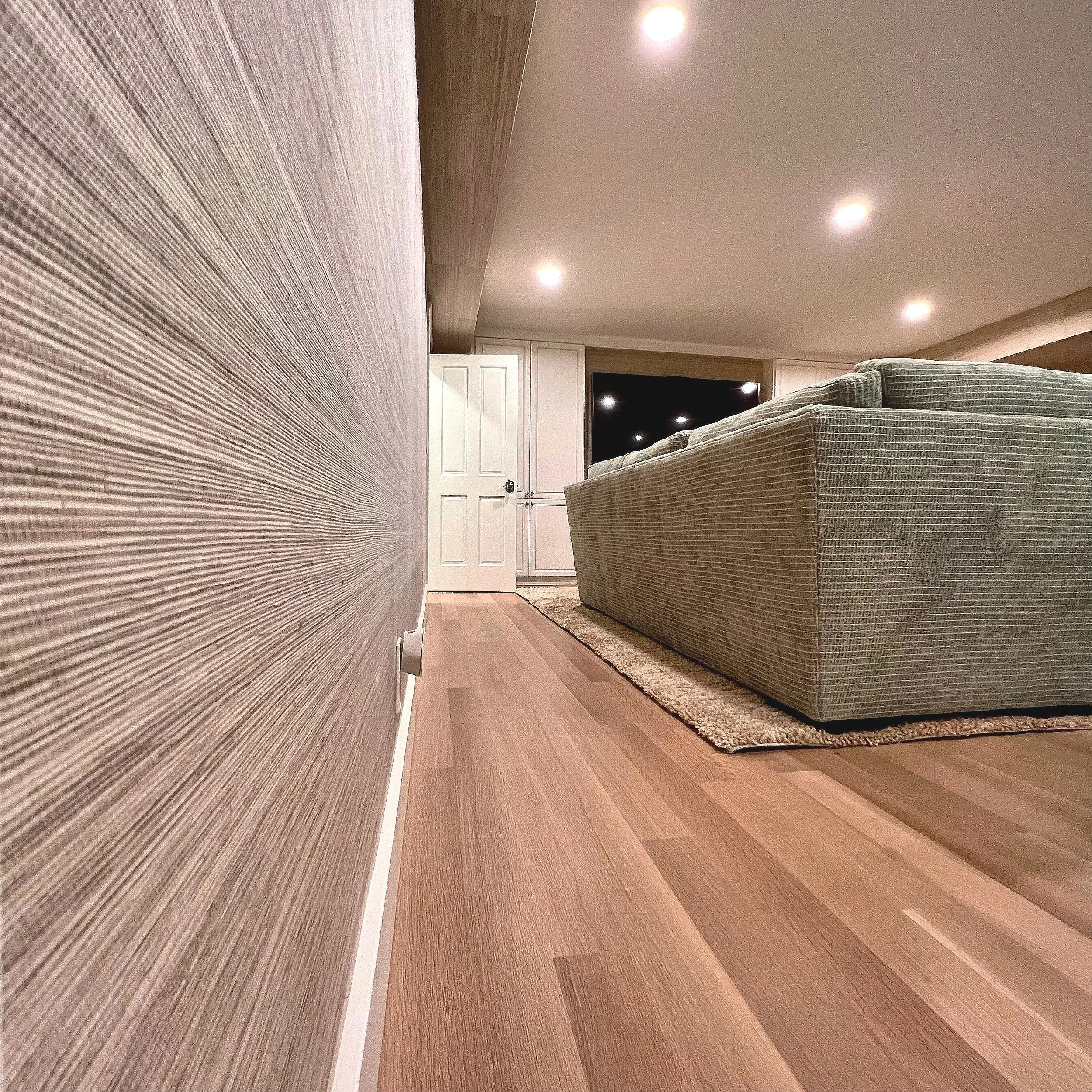
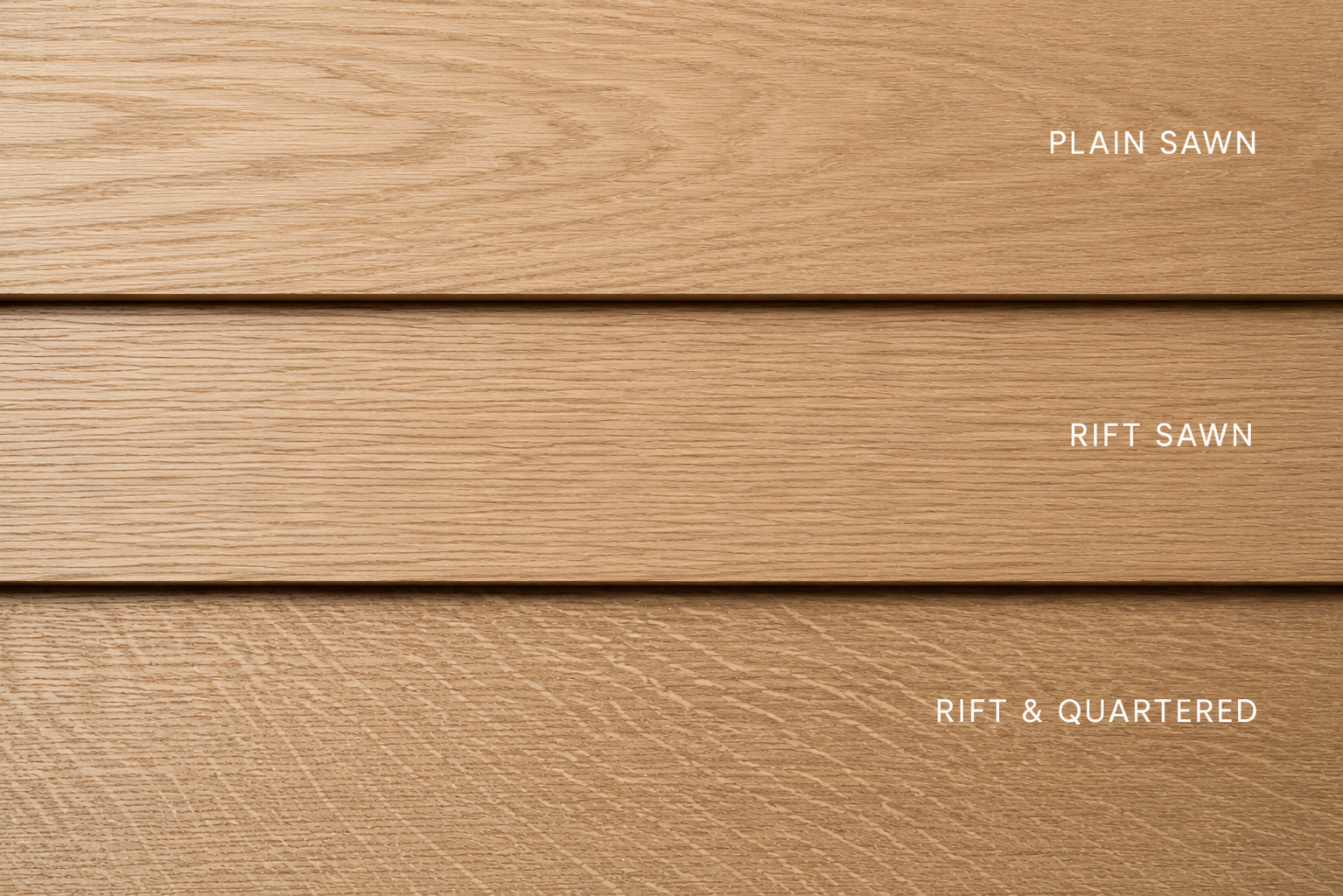
Plain sawing is the most common method of milling hardwood flooring. Clients can also purchase rift sawn, or rift & quatersawn. These materials are more stable than plain sawn wood. Because it expands and contracts less, clients will get less seasonal gapping, that is, cracks that open between boards. Rift and qtr’d lumber also has straight grain and its signature medullary rays, or “tiger stripes”.
What if you want character, a special cut, and long lengths?
special mills combine cuts and grades to achieve a unique look. For instance, Graf Bros (Pictured above) has up to 10’ lengths while still being character grade, and rift & qtr cut.
Solid vs Engineered Hardwood Floors
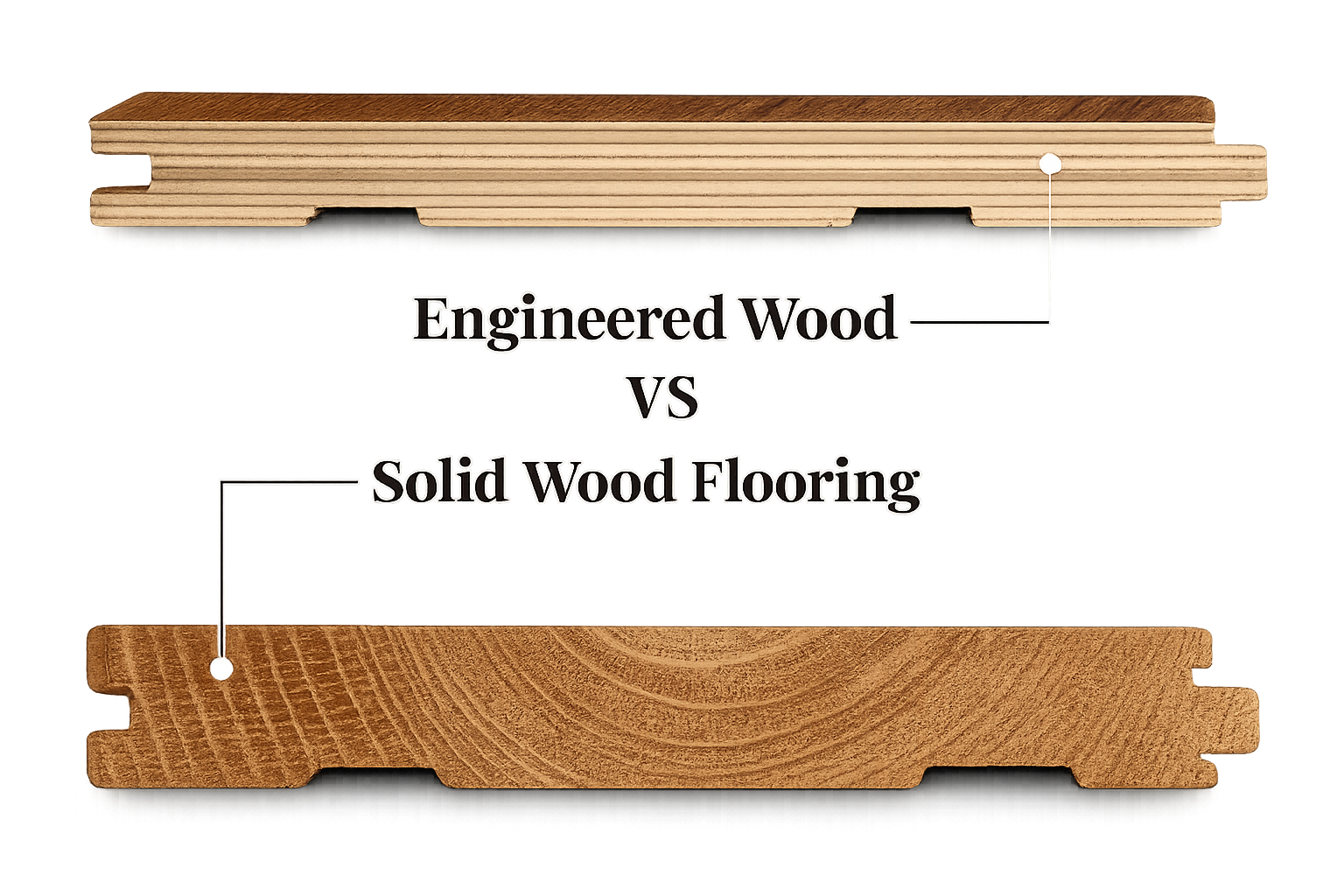
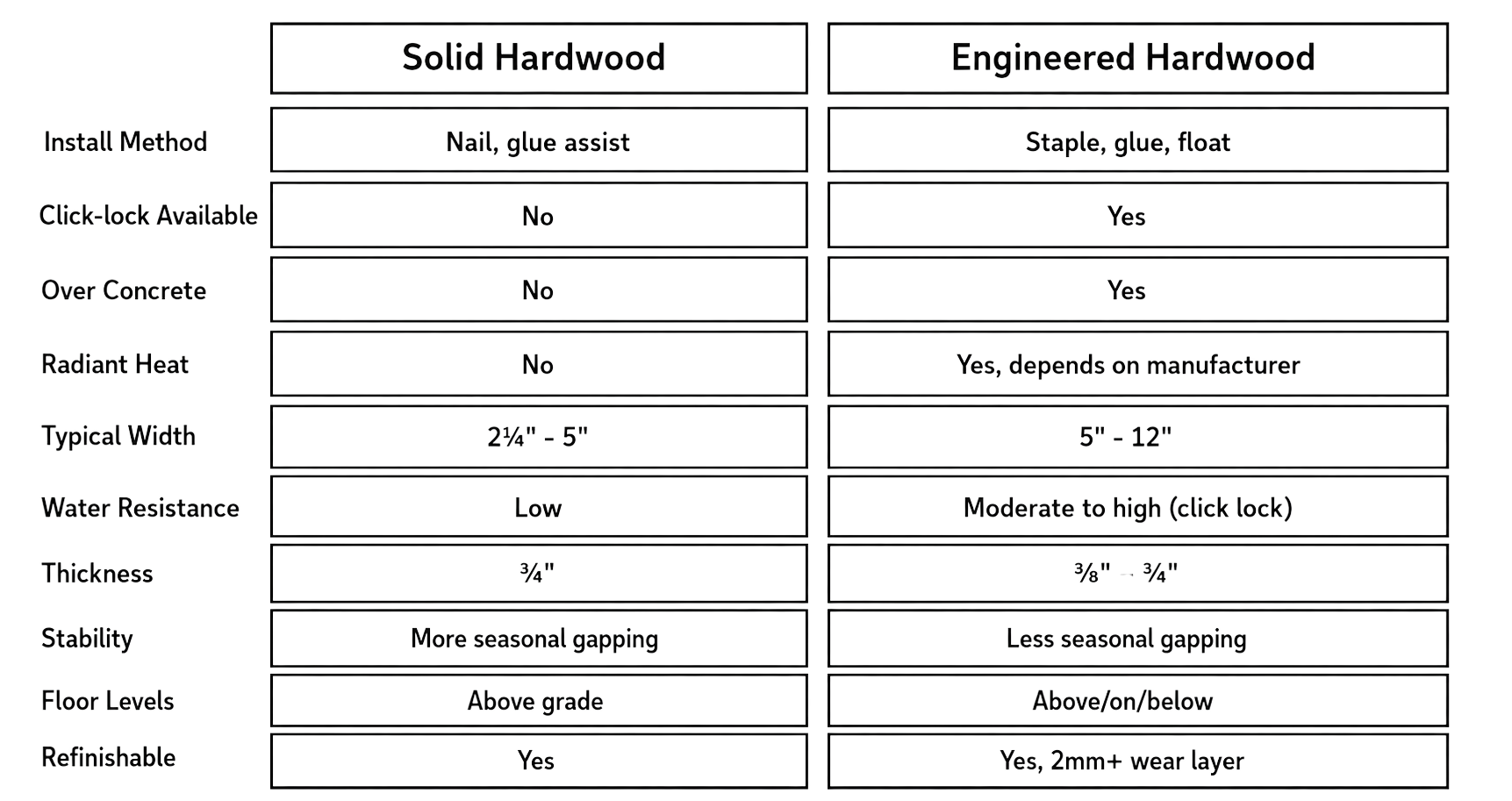
Engineered wood flooring
made with a real hardwood top layer bonded to multiple layers of plywood or composite core material.
Solid wood flooring
Made from a single piece of natural hardwood throughout the entire plank.
Hardwood Floor Finish Types
Pre Finished vs. Site Finished
Site Finished - This is traditional hardwood that gets installed, then sanded, gaps and knots are filled, and finish coats are applied in place. IF you already have these floors installed, you can refinish them to make them look new, and customize their appearance to your liking. If you want the ultimate freedom of color choice, pick site finish. Understand that this option will take more time to complete than installing pre-finished, and produce slightly more dust. Fortunately, Eco floors has industry leading dust collection that we’ve perfected over the last 20 years. Finally, we are able to keep most customers in their home during finishing, but if you are not able to stay off the floor during dry times, you will need to make arrangements to stay elsewhere.
Pre Finished - The hardwood planks will come with a very hard factory finish, and 95% of the time, a micro bevel (refer to picture). Rare brands will carry a “square edge” with no micro bevel. Most pre-finished floor will contain aluminum oxide in their finish, which is a chemical compound added to floor finish to enhance it’s durability. You should get an additional 5-10 years out of a pre finished floor, but know that the cost to refinish them will be around 50% higher. Also, you will generally not be able to achieve the same look of the floor after refinishing. Manufactures can add complex stains, wire brushing, and live sawn marks, that are not always possible or achievable in home.
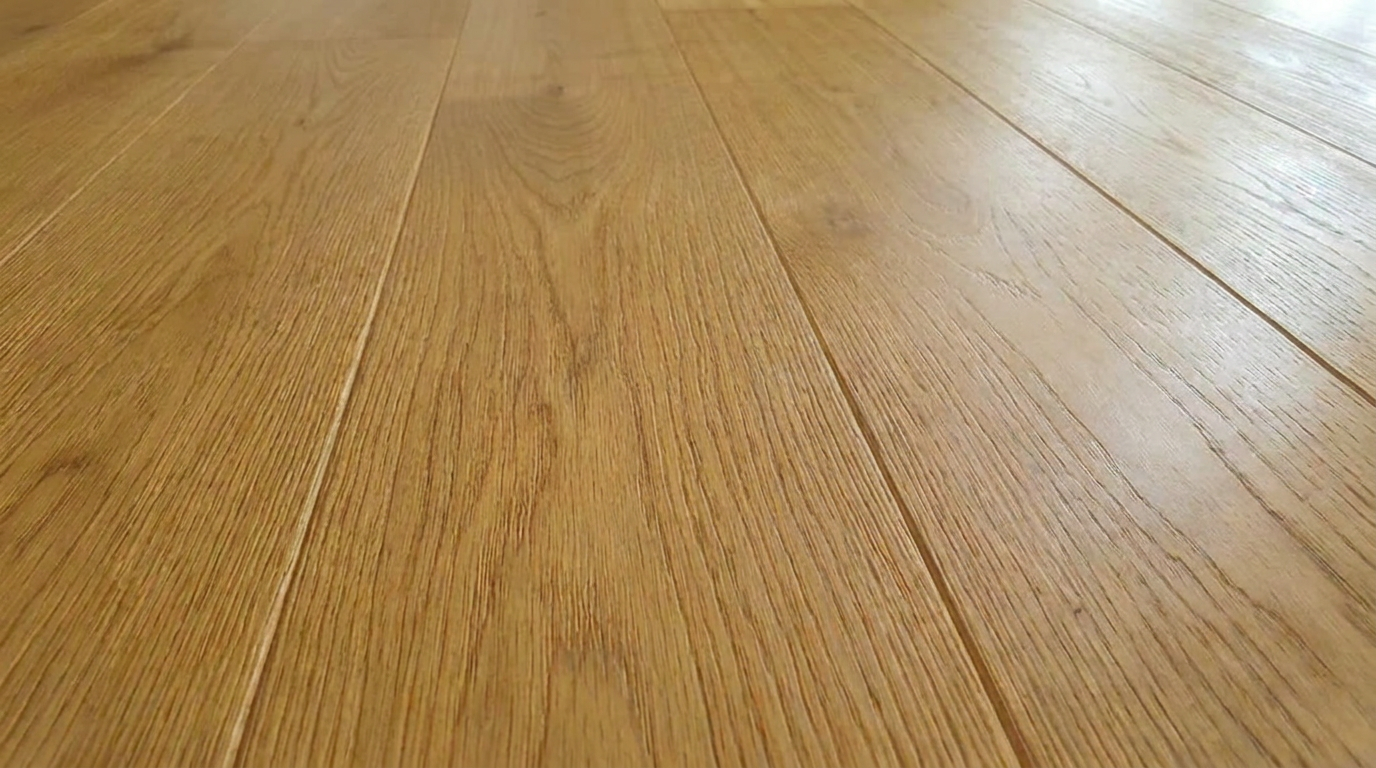
Micro Bevel
A rounded factory edge between boards to account for manufacturing tolerances.
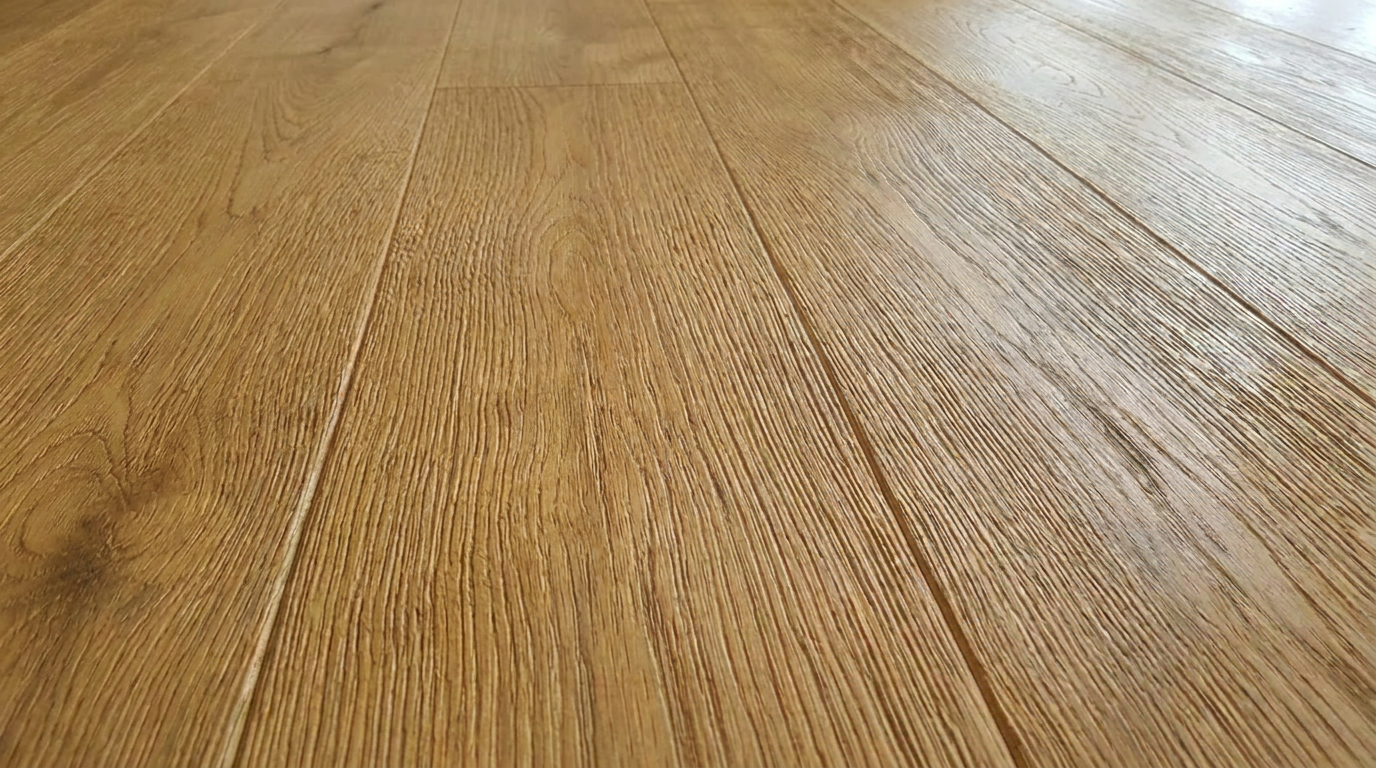
Wire Brushing
The grain comes brushed out to create a unique texture.
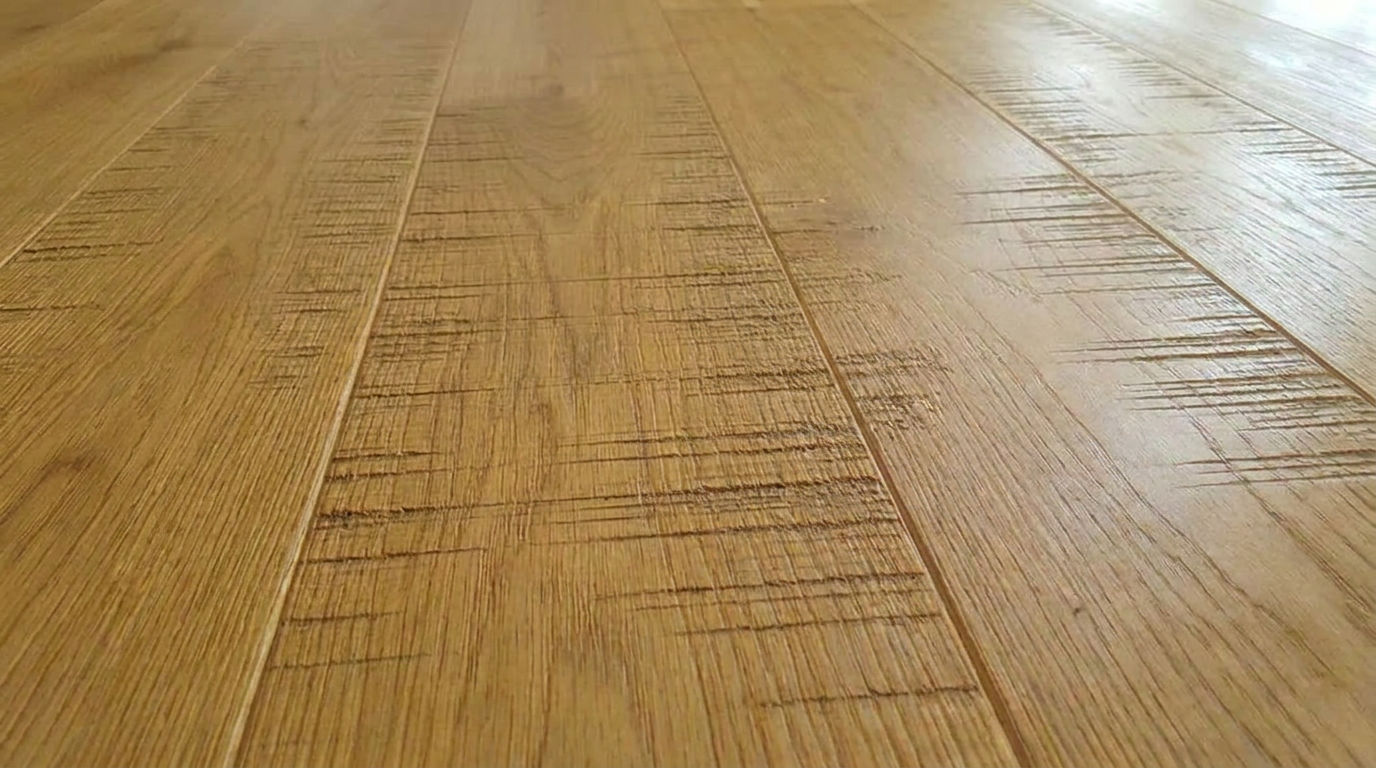
Live Sawn Marks
Saw mill marks are left in the finished wood to create a beautiful rustic look.
Stains
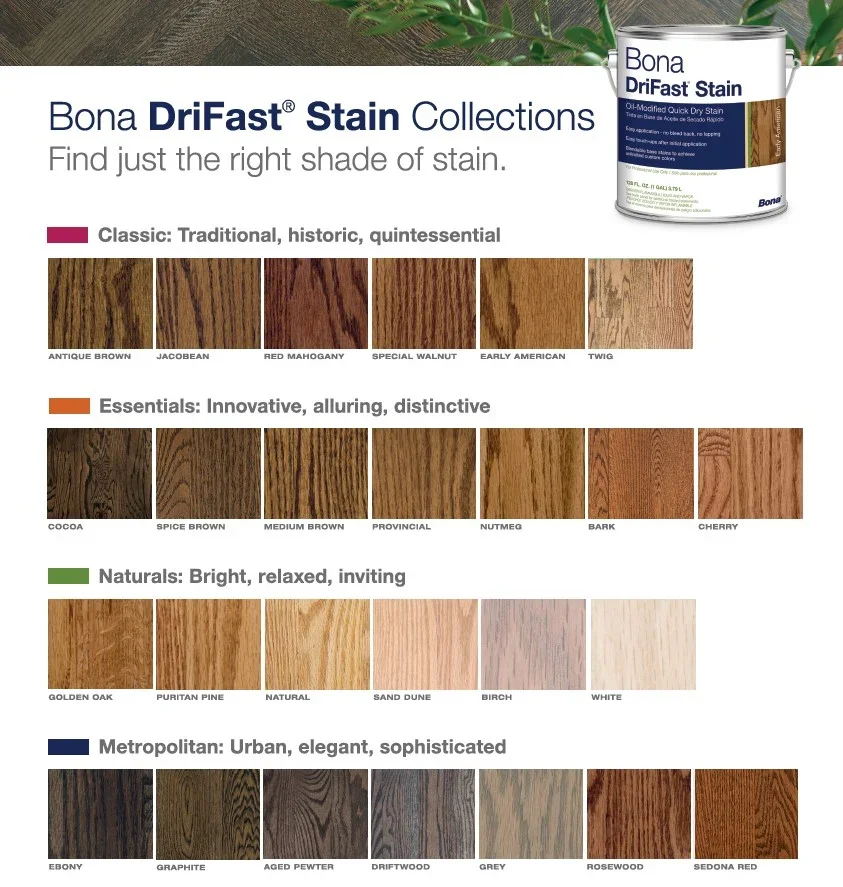
Staining is the process of adding color pigment to your site finished floor. It requires 2 additional sanding steps, and we often have to wet down the floor to help the grain accept the stain, so expect around 25% more cost, and 1-3 extra days. Also, stains can be mixed to achieve a custom color. This process should only be handled by a professional.
Eco floors is operated by Bona certified craftsmen with extensive experience and training in the art of staining. We put samples directly on your sanded floor to give you the most realistic look at how they will turn out.
Top Coat + Sheen
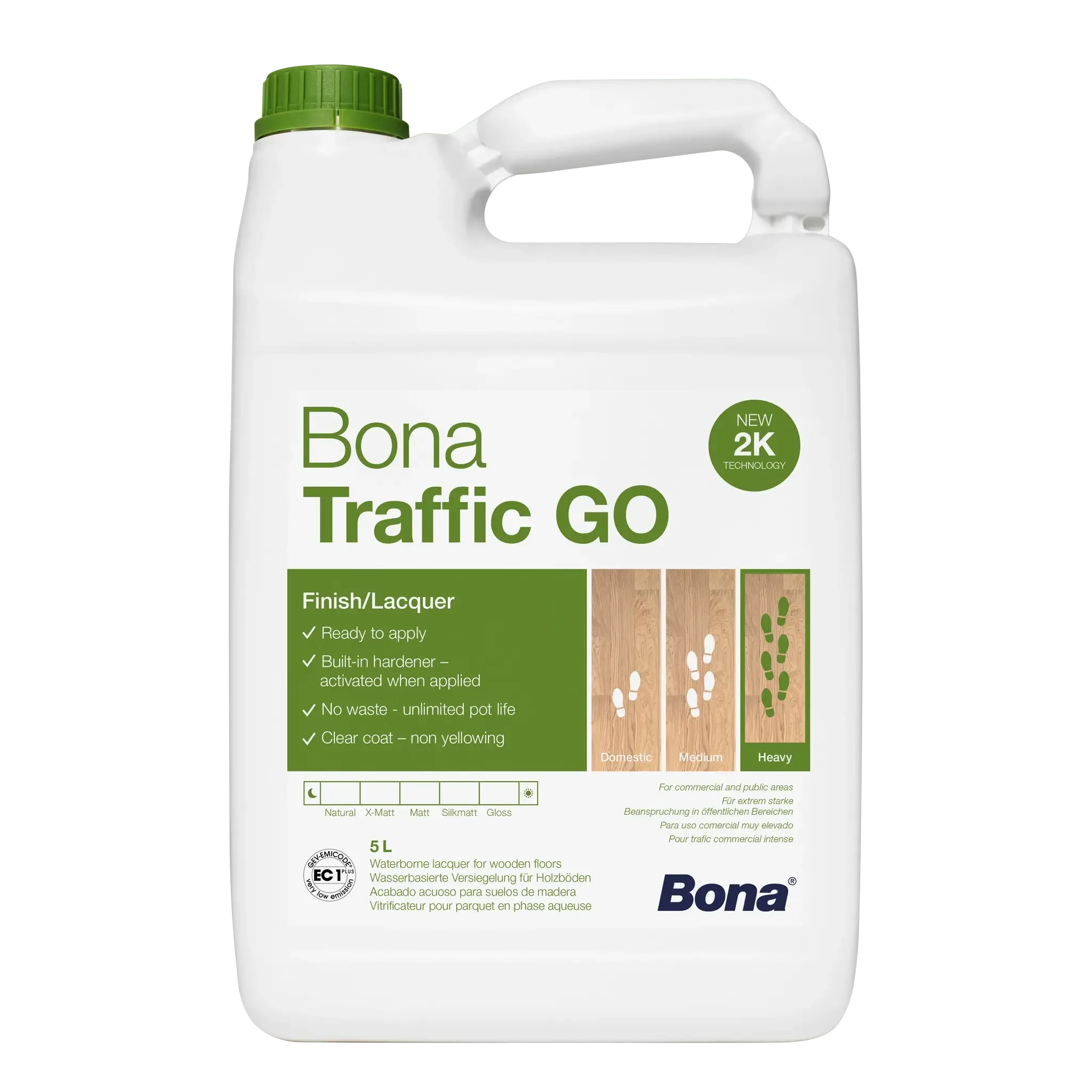
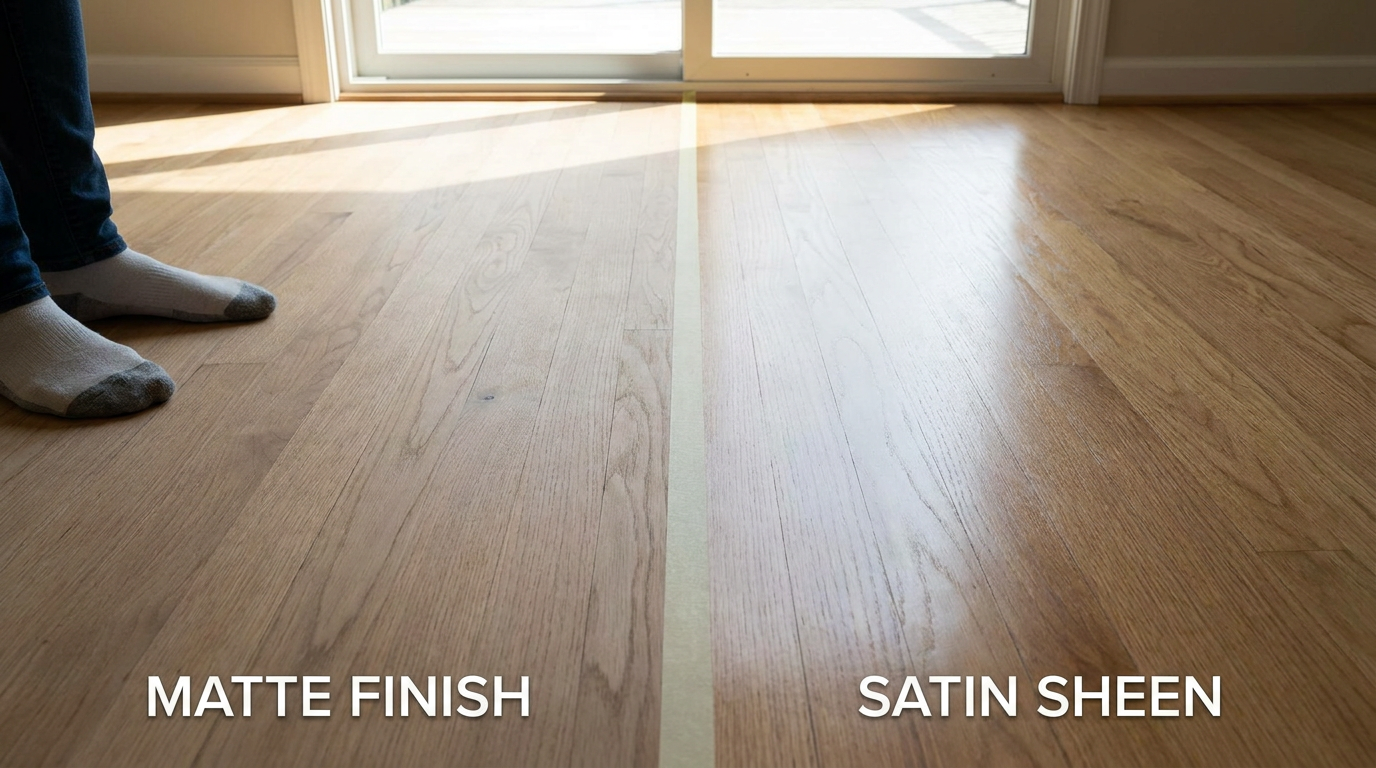
Our Final Step is adding protective top coats. We use one of the hardest finishes in the industry, Bona traffic GO, which is a water based urethane. Bona Traffic HD, the hardest, is available upon request for $0.50/sf upgrade. This is a Greengaurd Gold certified product that will not cause harmful off gassing in your home. You can also choose between matte and satin sheen. Sheen is the level of shine your floor will have. Matte finish will hide wear better. we recommend 2 coats standard, and 3 if you want additional protection.
Finish Alternative - Hardwax oil
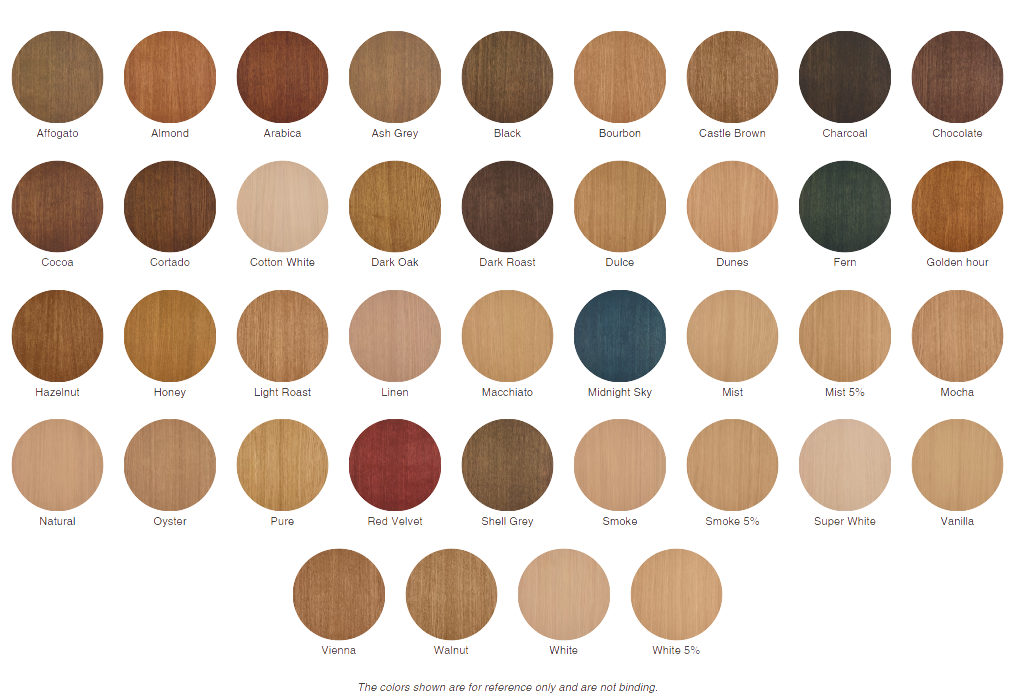
We also offer hardwax oil, specifically, Rubio Monocoat. This is a plant based, zero VOC finish that we suggest for our highly smell sensitive customers (any smell will be non toxic). Although not as durable as Bona Finish, Rubio monocoat can be spot repaired, and re-oiled to restore the finish. You can achieve stain or natural colors, and cost are only around 15% more will no additional time needed, due to the single coat. Occasionally a floor may require two coats for even saturation. Rubio will have a matte finish.